What if the greatest luxury on the river isn't a marble lobby, but a draft shallow enough to reach the villages that time forgot? For many travelers, the ****Mekong represents the pinnacle of Asian exploration, yet most visitors wall themselves off from the very culture they came to see by boarding massive vessels. These floating hotels often find themselves restricted to the main channels, unable to navigate the shifting sandbars of the Tonle Sap or dock at the tiny, artisanal hamlets that line the banks between Saigon and Siem Reap.
You likely recognize that a 7-night journey through Vietnam and Cambodia should be more than just a commute between landmarks; it should be an immersion into a living history. This guide will show you how to navigate the complexities of high and low water seasons to ensure your voyage remains uninterrupted. We'll explore why choosing a hand-crafted, shallow-draft vessel is the only way to gain genuine access to remote communities and how expert-led historical context transforms a simple holiday into a profound expedition.
The Allure of a River Expedition on the Mekong
The Mekong River is often referred to as the "Mother of Water," a title that reflects its role as a 4,350km artery sustaining life across six nations. For those seeking a connection to the soul of Indochina, 2026 represents a critical juncture. As infrastructure projects and modernization accelerate across the region, the window to witness the river’s traditional rhythms is narrowing. Choosing a river expedition over a standard cruise is the distinction between observing a culture from a distance and participating in its daily life. While a cruise might prioritize the ship as the destination, an expedition treats the vessel as a platform for discovery, focusing on cultural immersion and historical depth.
The Cultural Tapestry of the Delta
The journey begins in the lush expanse of the Delta, where life is dictated by the tide. In provinces like Ben Tre, the French colonial legacy remains visible in the architecture of riverside villas, standing in quiet contrast to the vibrant chaos of floating markets and sprawling fruit orchards. As you move upstream, the atmosphere undergoes a profound spiritual shift. The bustling, commerce-driven energy of the Vietnamese Delta gradually gives way to the serene, golden-roofed pagodas of Cambodia. This transition is best witnessed from the water, where the slow pace allows for an authentic observation of the river folk who have called these banks home for centuries.
Beyond the Tourist Trail
Major land-based hubs often struggle with the weight of over-tourism, yet the river offers a private escape into the real Southeast Asia. By utilizing small ships, travelers bypass the crowded bus routes and souvenir stalls, instead finding themselves in remote artisanal villages where visitors are still a rarity. The presence of locally hired crews and expert guides is indispensable here; they don't just provide facts but offer lived insights into the regional history and customs. Pandaw's **Classic Mekong ** stands as a 7-night bridge between the modern bustle of Saigon and the ancient, silent temples of Angkor.
The Pandaw Difference: How Shallow-Draft Vessels Redefine Mekong Cruising
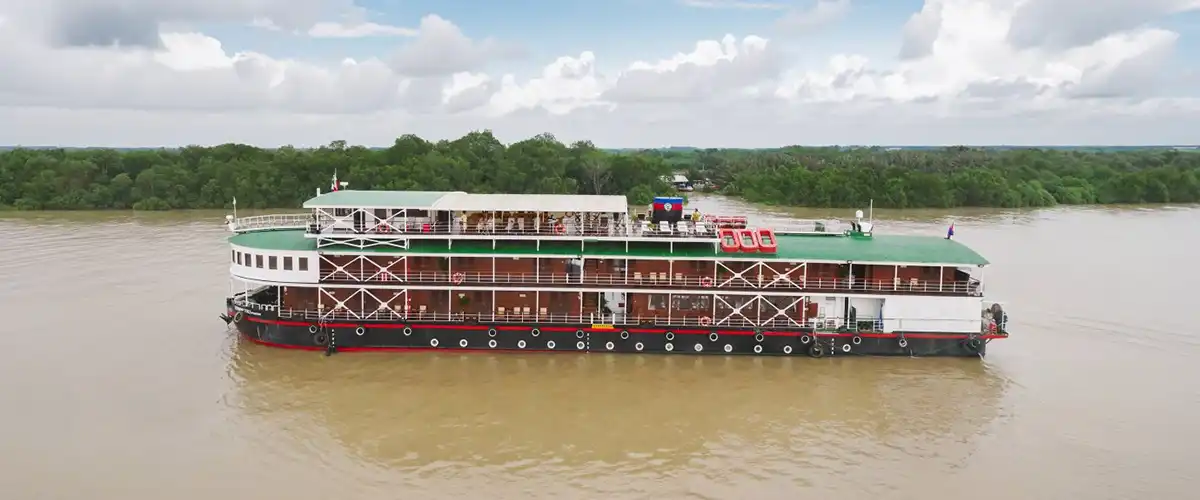
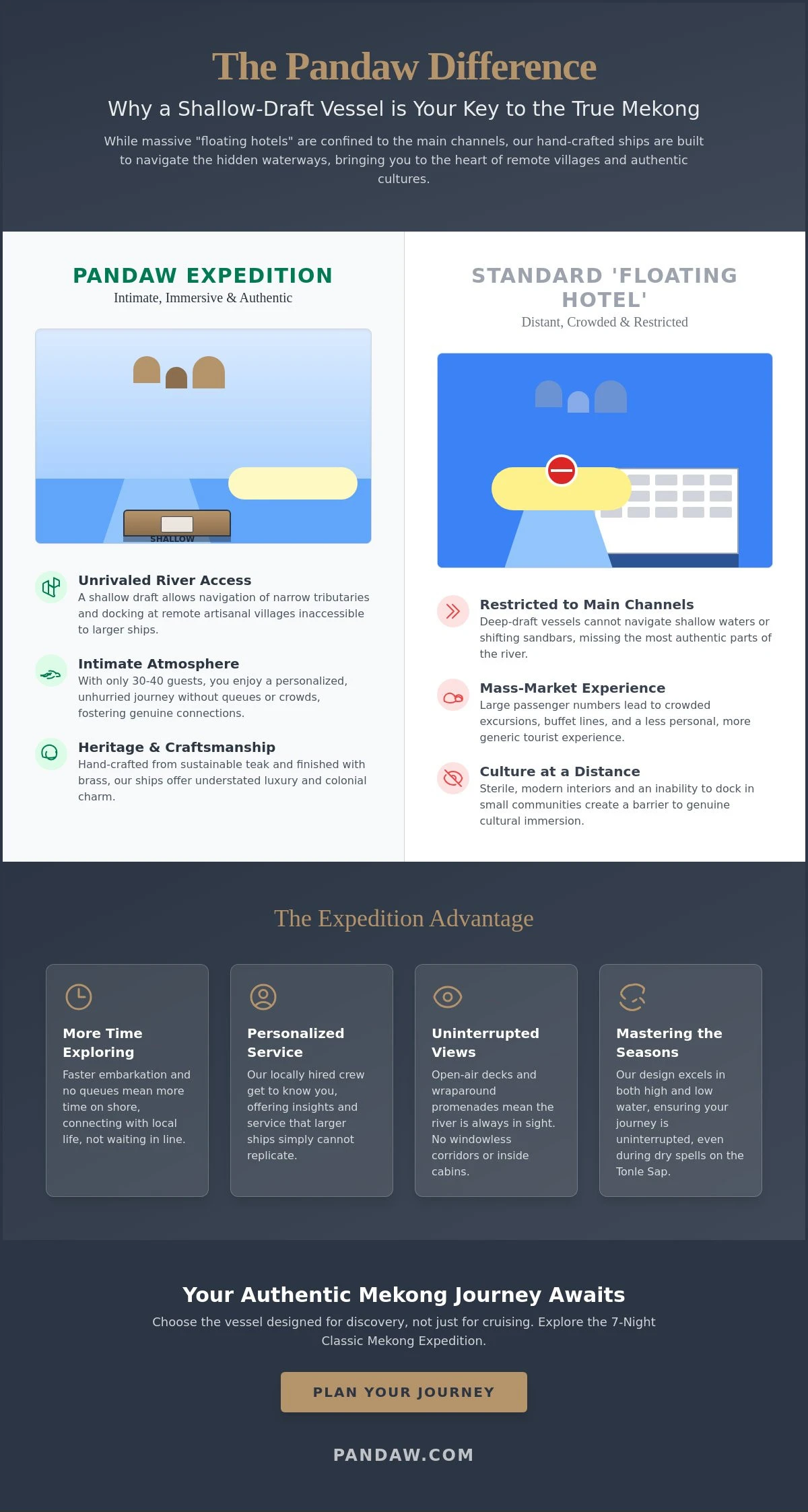
Success on the river depends entirely on the vessel. In a landscape where water levels can fluctuate by several meters in a single season, the draft of a ship (depth of the hull below the waterline), becomes the most critical factor for exploration. Pandaw's pioneering approach utilizes shallow-draft engineering, allowing us to navigate the intricate waterways and sandbars that define the region.
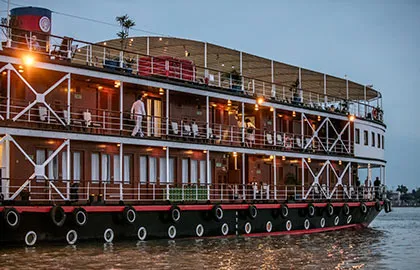
Our fleet represents a revival of the Irrawaddy Flotilla Company’s heritage, blending historical authority with an adventurous spirit. Each ship is hand-crafted from teak and finished with brass, creating an aesthetic that stands in stark contrast to the interiors of mass-market tourism river cruises. The onboard atmosphere is defined by understated luxury; there are no windowless corridors or cramped cabins. Instead, we prioritize open-air decks and wraparound promenades that bring the river to you. These lighter, smaller vessels also minimize our environmental footprint on the riverbanks, preserving the very ecosystems we come to admire.
With only 30 to 40 like-minded explorers on board, the pace of travel is unhurried, and the service is personalized. You won't find the long queues or crowded buffet lines. Instead, faster embarkation means more time spent in the heart of the community. If you're ready to see the river as an insider, you can view our Classic Mekong itineraries to find the perfect fit for your journey.
High Water vs. Low Water: Choosing the Perfect Time for Your Journey
The rhythm of life along the river is dictated by a singular, powerful pulse: the annual monsoon. Unlike static land tours, the Mekong is a dynamic experience that shifts its character based on the water's depth. Understanding these seasonal fluctuations is essential for any connoisseur planning an expedition. The Mekong River Commission provides the technical data that confirms how the river’s volume can increase tenfold during the peak of the wet season, a phenomenon that fundamentally alters the geography of the Tonle Sap. Whether you seek the lush, emerald landscapes of the "green season" or the cooler, drier days of the winter months, each period offers distinct advantages for the discerning traveler.
The High Water Experience
From August through November, the Mekong has increased water levels, allowing our vessels to sail directly across the Great Tonle Sap Lake, providing a seamless arrival into the heart of Siem Reap. This season offers the rare spectacle of the flooded forest, where trees stand submerged in a mirror-like expanse of water. While the humidity is higher and brief afternoon showers are common, the reward is a landscape of vibrant intensity. Photographers particularly prize these months for the dramatic clouds and the lushness of the riverbanks. The primary benefit here is logistical ease; you'll spend more time on the water and less time on road transfers.
The Low Water Advantage
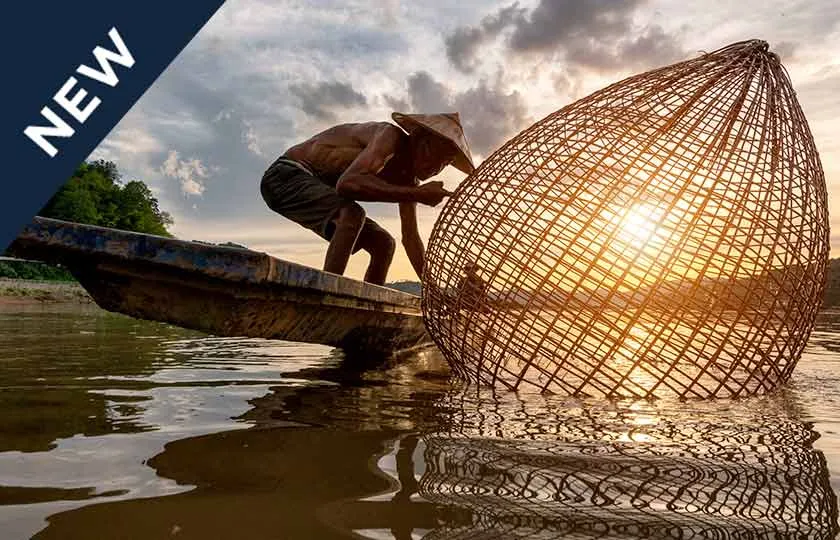
As the rains subside from December through July, the river enters its low water phase. This period is often considered the most comfortable for exploring the land-based wonders of the region. Because the Tonle Sap River becomes too shallow for even the most specialized craft to reach the lake, we utilize a land transfer. This road journey through the rural Cambodian heartland offers an intimate glimpse into village life that you wouldn't otherwise see from the river. Low water also exposes the dramatic sandbars and riverbanks, providing superior opportunities for spotting local wildlife and observing the intricate fishing techniques used by the river folk.
Ultimately, the choice depends on your personal priorities. Do you prefer the thrill of going Deeper & Further on the Mekong with a direct nautical crossing, or would you rather have the temperate climate and the deep-country insights provided by the Classic Mekong? Regardless of the month, the river remains a constant, providing a window into a world that operates on a much older, slower clock than our own.
From Saigon to Siem Reap: Mapping the 7-Night Classic Route
Embarking in central Saigon marks a transition from the frenetic energy of modern Vietnam to the timeless flow of the delta. As the skyscrapers of District 1 recede into the haze, the vessel enters the Vam Co River; this is a quiet gateway where the urban landscape yields to the emerald expanses of the countryside. This 7-night journey is not merely a transfer between two cities but a carefully curated narrative of the region's soul. **The Classic Mekong ** route is designed to uncover the layers of history that define Indochina, moving from the colonial echoes of the Delta to the ancient spiritual heart of the Khmer Empire.
Vietnam: The Fertile Delta
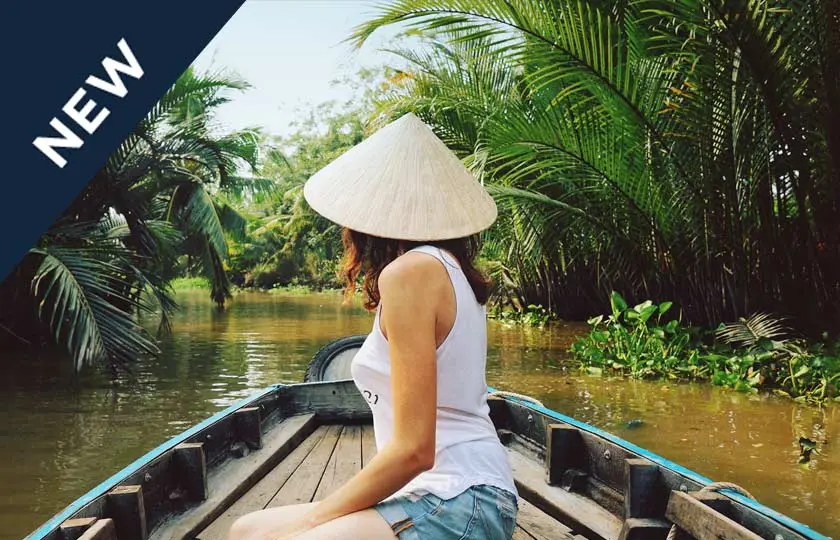
The first chapters of our expedition unfold in the Delta heartland. In Ben Tre, we utilize traditional sampans to navigate mangroves, allowing for an intimate look at local fruit orchards. The journey continues through the Cho Gao canal, a vital maritime artery that hums with the commerce of local traders. In the village of Pak Russei, we witness the work of artisanal silk weavers, a craft preserved through generations. Before leaving Vietnam, a visit to the Cao Dai temple in Tan Chau provides a look at the region's unique religious syncretism. For those specifically interested in the transition between these two nations, you may explore our guide on Saigon to Phnom Penh: Crossing Borders on the Mekong.
Cambodia: History and Spirituality
The border crossing at Chau Doc is a seamless experience, marking our entry into the Kingdom of Cambodia. We arrive in Phnom Penh, the "Pearl of Asia," where the city is best explored by the slow, rhythmic pace of a cyclo. The capital offers a study in contrasts; we admire the gilded elegance of the Royal Palace while reflecting on the sobering history of the Killing Fields. As we move into the Upper Mekong, the atmosphere turns toward the spiritual. At a remote riverbank monastery, guests often receive a water blessing from local monks, a moment of profound tranquility.
The final days of **The Classic Mekong ** are spent in the serene reaches of the Tonle River. We climb the hills of Oudong, the former royal capital, for meditations overlooking the vast plains below. Our exploration concludes in the pottery villages of Peam Chi Korng, where the tactile luxury of the river life is most evident in the local craft. This route ensures that by the time you reach the temples of Angkor, you aren't just a tourist; you are a traveler who understands the river that made those empires possible. If you are ready to begin your own story, view The Classic Mekong expedition dates and choose your preferred departure.
Planning Your Expedition: Cabins, Extensions, and Private Charters
Every stateroom on a Pandaw vessel is a testament to our maritime heritage. Unlike the floating hotels that isolate passengers behind sealed glass, our cabins open directly onto the promenade decks. This design ensures that every guest enjoys a panoramic river view and immediate access to the fresh air of the Delta. Whether you choose the RV Mekong Pandaw or the RV Bassac Pandaw, you'll find an intimate atmosphere that prioritizes comfort without the unnecessary clutter of modern steel liners.
Our All-Inclusive promise is designed to maintain the unhurried rhythm of your journey. Your expedition fare covers all scheduled shore excursions, entrance fees, and meals prepared with local ingredients. We also include crew gratuities in the fare, removing the need for daily tipping and allowing you to focus entirely on the cultural immersion at hand.
Maximizing Your Time in Asia
We recommend arriving in Saigon at least 2 days before your embarkation date. This allows you to acclimatize to the tropical climate and explore the city's French colonial architecture at your own pace. To simplify your logistics, we offer curated Saigon or Siem Reap hotel packages that include transfers directly to the ship.
Frequently Asked Questions
What is the best month to do the Classic Mekong river cruise?
The most temperate months for The Classic Mekong expedition are November through February, when the region experiences its "cool" season with temperatures averaging 26°C. While the high water months of August to October offer lush landscapes and direct sailing across the Tonle Sap, the drier winter months provide clearer skies for temple exploration. Each season offers a unique perspective on the river's life, from emerald floods to golden harvests.
Do I need a visa for both Vietnam and Cambodia on this route?
Most travelers require separate visas for both Vietnam and Cambodia. For Vietnam, citizens from 80 countries can apply for a 30-day E-visa online before arrival. For Cambodia, while E-visas are often not accepted at waterway border crossings, our crew facilitates a "Visa on Arrival" service at the river border for a fee of approximately USD 35 to 50, payable in cash. It's essential to have blank passport pages ready for these stamps.
Is the Classic Mekong cruise suitable for travelers with limited mobility?
River expeditions are unfortunately not well-suited for travelers with limited mobility or those requiring wheelchairs. Our handcrafted teak vessels don't have elevators, and the gangplanks can be steep depending on the river's water level. Shore excursions often involve walking on uneven riverbanks, boarding small sampans, and navigating rural village paths that lack paved infrastructure. We prioritize safety and intimate access, which often requires physical flexibility.
What is the difference between Upstream and Downstream itineraries?
The primary difference lies in the narrative arc of your journey. Upstream voyages begin in the bustle of Saigon and build toward the ancient grandeur of Angkor, while downstream trips offer a relaxing descent from the temples into the fertile Delta. Both 7-night itineraries cover the same cultural landmarks and artisanal villages; however, seasonal water levels may influence the specific mooring points used for each direction. Both directions provide a deep, historian-led immersion.
What kind of food is served on a Pandaw Mekong cruise?
Dining on board is a blend of high-quality international cuisine and authentic regional flavors. Our chefs source fresh ingredients from local markets along the riverbanks. Guests can expect a variety of Vietnamese and Cambodian specialties, such as fresh spring rolls and traditional curries, alongside familiar Western options. All meals are served in an open-air dining room, ensuring you never lose touch with the river's atmosphere.
What is included in the Pandaw expedition fare?
Our expedition fare is designed to be comprehensive, covering all onboard meals, bottled water, jugged coffee, and local teas. Also included are all scheduled shore excursions led by expert guides, entrance fees to historical sites, and even crew gratuities. This all-inclusive approach ensures a seamless experience where you don't have to worry about daily expenses. We believe in providing a journey that is as much about relaxation as it is about cultural discovery.