The Golden Triangle: A Guide to the Upper Mekong
For decades, the mere mention of the golden triangle conjured images of clandestine trade and forbidden frontiers, yet the reality today is a living history of shared heritage that outshines its shadowed past. It's easy to feel overwhelmed by the complex geography where Thailand, Laos, and Myanmar meet, especially with shifting travel regulations, but this guide will reveal how the Upper Mekong serves as a cultural crossroads where the traditions of three nations interweave along the riverbanks. You'll discover the rich heritage of the diverse ethnic groups residing here and gain a deeper understanding of the region's historical significance. We'll look at the practicalities of modern travel, from the Huay Xai border crossing to the duty-free zone of Don Sao, providing a path to experience these storied borderlands with the respect and curiosity they deserve.
Defining the Golden Triangle: Where Three Frontiers Meet
At the point where the Ruak River flows into the mighty Mekong, three distinct nations converge in a silent, watery embrace. This is the heart of the golden triangle, a geographic confluence known as Sop Ruak. From the Thai shoreline at Chiang Saen, one can look across the moving water to see the dense jungles of Myanmar and the misty hills of Laos. It's a place where the air feels thick with the stories of travelers, traders, and tribes who've crossed these waters for generations.
The moniker itself carries a weighty history. While it now signifies a rich cultural landscape, the name originally referred to the gold bars used as currency in the illicit opium trade that once dominated these rugged highlands. Historically, the Golden Triangle covered roughly 950,000 square kilometers. It created a lawless frontier where borders were fluid, and the river was the only reliable road. Today, that legacy has been reclaimed by the shimmering temples and the valuable heritage of the people who call these riverbanks home.
The Geography of the Tri-Border Region
The geography here is defined by the sediment-heavy waters of the Upper Mekong. It acts as a natural artery, a lifeline that has sustained civilizations for centuries. At Sop Ruak, the smaller Ruak River provides the boundary between Thailand and Myanmar before joining the Mekong, which then separates Thailand from Laos. This intersection is more than a map coordinate; it's a vantage point where the shared heritage of the Tai people remains visible despite the political lines drawn in the soil.
The region's reach extends far beyond the immediate riverbanks, stretching into the emerald Shan State of Myanmar and the remote northern Laotian highlands. In recent decades, a transformation has taken root. The vast poppy fields of the 20th century have largely been replaced by terraced tea plantations and coffee groves. For the modern explorer, this shift has opened the way for deeper discovery. Navigating the Laos Mekong allows for an intimate look at this transition, where ancient traditions endure in villages that were once closed to the outside world.
A Legacy of Trade: From Opium to Cultural Crossroads
The story of the golden triangle is linked to the shifts of 19th-century power. As British and French colonial interests pressed into the northern reaches of Indochina, they found a region where opium was not just a crop but a primary currency. These colonial ambitions redrew maps, creating the rigid political borders that today define Thailand, Laos, and Myanmar. While the name once signaled a frontier of illicit trade, the modern landscape tells a different story. The Hall of Opium museum now stands as a place for historical reflection, documenting the impact this period had on regional communities and the subsequent path toward healing.
Over the last several decades, the hillsides once blanketed in poppy have been reclaimed. Through visionary crop substitution programs, local farmers have turned their focus toward high-altitude coffee, rich teas, and the production of mulberry silk. This economic shift hasn't just changed the view; it's preserved the dignity of the hill tribes who've called these mountains home for centuries. The result is a tapestry of agricultural life that honors the land rather than depleting it.
The Influence of the Mekong Trade Routes
The Mekong has always been more than a boundary; it was the vital artery for merchant caravans arriving from Yunnan, bringing silk and spices on the backs of mules and horses. This tradition of river-borne discovery continues today. Exploring the Laos Mekong allows travelers to trace these ancient paths, witnessing how the river remains the heartbeat of Southeast Asian commerce and culture.
Much of the region's peaceful transformation is due to the long-standing commitment of the Thai royal family to sustainable development. In Chiang Saen, ancient brick stupas and weathered temples stand as silent witnesses to the rise and fall of kingdoms. These ruins remind us that the region’s identity is rooted in a history far deeper than any single trade era. To see these landscapes for yourself, consider joining one of our small-ship river expeditions where history is felt in every mile of the journey.
The Diverse Tapestry: Ethnic Cultures and Traditions
Beyond the geopolitical boundaries of the golden triangle lies a human landscape as varied as the terrain itself. This region is home to a vibrant collection of hill tribes, including the Akha, Hmong, Lahu, and Karen, each maintaining distinct identities through centuries of migration and mountain life. Their presence is felt most vividly in the splash of indigo and scarlet found in traditional dress. Intricate silverwork, often worn as elaborate headpieces or heavy necklaces, serves as both a display of craftsmanship and a portable history of a family’s heritage. These textiles aren't merely clothing; they're stories woven into the fabric of daily life.
Spirituality here is a layered experience. While the golden spires of Theravada Buddhist temples dominate the riverfront towns, the highland villages often remain rooted in ancient animist beliefs. Spirits of the forest, the water, and the ancestors are honored with small shrines and seasonal rituals. This blend of faiths creates a unique cultural rhythm, where the tolling of a temple bell might coincide with a village offering to the river spirits. It's a world where modern borders feel secondary to the enduring traditions of the people.
Sustainable Cultural Encounters
Experiencing these cultures requires a delicate balance. We believe in the value of respectful, small-scale interaction that prioritizes the dignity of the local community over the spectacle of mass tourism. Our Laos Mekong expeditions are designed to facilitate these quiet connections, allowing for meaningful conversation and shared moments in remote villages. To discover these hidden corners of the river for yourself, we invite you to view our upcoming expedition dates and join a journey rooted in discovery.
Navigating the Triangle: Exploring the Upper Mekong by River
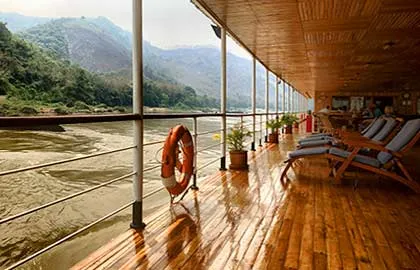
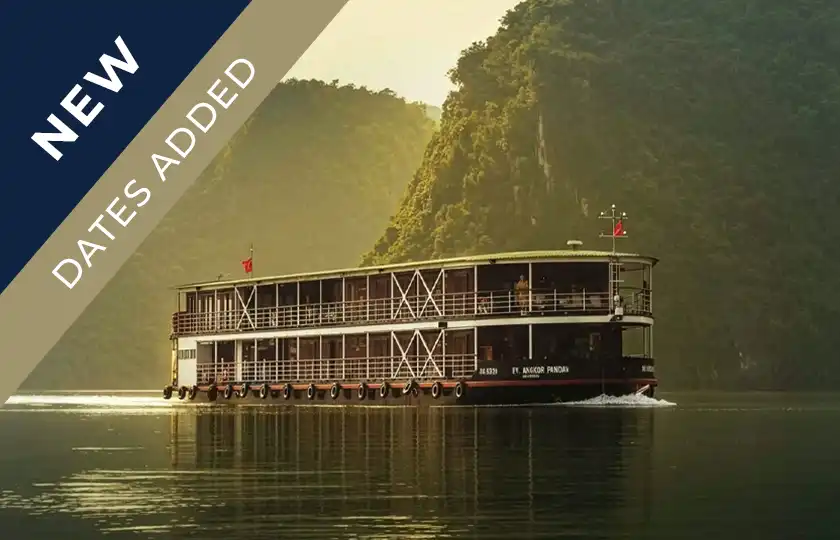
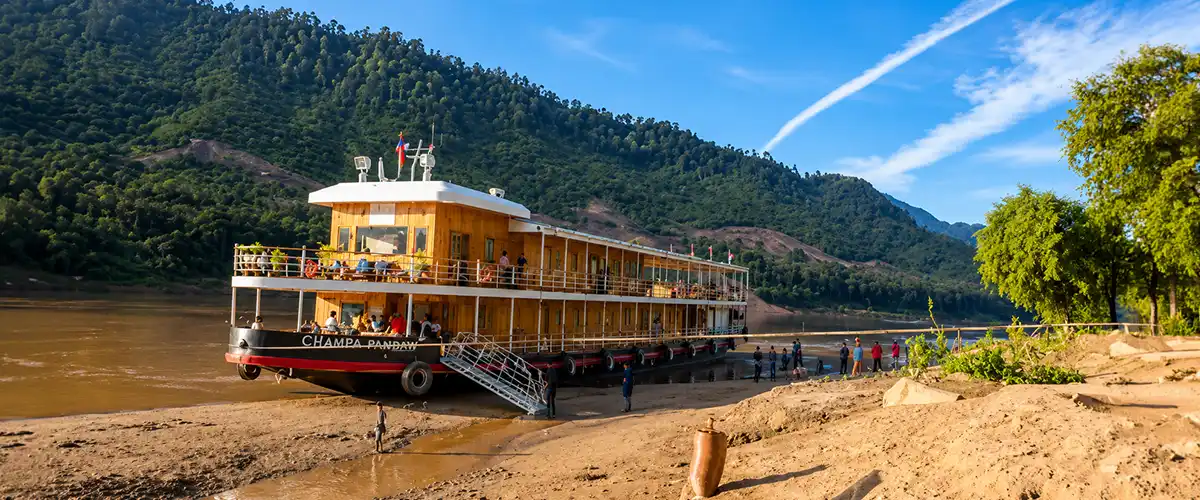
Navigating the upper stretches of the Mekong requires more than just a vessel; it demands a deep respect for the river's unpredictable character. Unlike the wide, languid waters of the south, the river here is a sequence of dramatic gorges and formidable rapids that have challenged explorers for centuries. Reaching the secluded heart of the golden triangle is only possible with specialized, shallow-draft vessels designed to skim over these rocky obstacles. Onboard, the aesthetic of hand-rubbed teak and polished brass evokes a sense of nostalgia, recalling the early days of river discovery while providing a vantage point far removed from the crowded, noisy speedboats often found at the border's edge.
The journey through these borderlands isn't about rushing from one landmark to the next. Instead, it's about the slow unfolding of the landscape. Moving beyond the typical tourist trap points allows for the discovery of secluded river stretches where the jungle remains thick and the only footprints on the sandbars belong to local fishermen. This approach honors the heritage of the great river expeditions of the past, focusing on the quiet beauty of the water and the ancient rhythms of the land.
Frequently Asked Questions
Is the Golden Triangle safe for travelers in 2026?
Safety in this region is nuanced and depends largely on which frontier you visit. While the Thai and Lao riverbanks remain peaceful and welcoming for travelers, the situation in Myanmar's Shan State is currently unstable due to ongoing internal conflict. It's best to stay informed on local conditions and stick to established river routes where local expertise ensures a secure and meaningful experience for every explorer.
What countries make up the Golden Triangle region?
The geographic meeting point of Thailand, Laos, and Myanmar defines the Golden Triangle. These three nations converge at the confluence of the Ruak and Mekong rivers near the historic town of Chiang Saen. While the physical border point is a specific coordinate, the cultural region extends deep into the highlands of all three countries, creating a shared heritage that spans across modern political boundaries.
Can you cross the borders between Thailand, Laos, and Myanmar here?
Crossing borders here depends on the specific frontier you intend to visit. As of early 2026, the Mae Sai crossing between Thailand and Myanmar remains closed to foreign nationals due to regional instability. However, the border between Chiang Khong, Thailand, and Huay Xai, Laos, is open and offers visas on arrival, making it the primary gateway for those exploring the Upper Mekong by boat.
What is the best way to see the Golden Triangle without the crowds?
Avoiding the typical tourist hubs requires leaving the road behind for the quiet of the water. Small-ship expeditions allow you to bypass the busy day-trip sites and reach secluded stretches of the river. These specialized vessels navigate narrow channels and dock at remote villages, offering an intimate perspective on the landscapes that land-based tours simply cannot provide. It's a respectful way to connect with local communities.
Why was the region historically famous for opium production?
The region's fame for opium was fueled by its remote, mountainous terrain and a lack of centralized control during the colonial era. For decades, the poppy was a primary cash crop for isolated highland tribes. This legacy of the golden triangle has since been transformed through successful crop substitution programs, which have replaced poppy fields with sustainable tea and coffee plantations that support the local economy today.