Could the secret to escaping Southeast Asia's crowded tourist hubs be hidden behind a vessel draft of just three feet? While many travelers settle for the predictable waters of the delta, the upper mekong remains a rugged, mountainous frontier that demands a specialist's touch to navigate. You probably worry that venturing into remote Laos means sacrificing comfort or battling unpredictable seasonal water levels, but the reality of modern river expeditions tells a different story.
We understand that planning a journey into such a wild landscape feels daunting, especially when navigating the logistics of a 2026 Laos tourist visa or choosing between a 10-night expedition and a shorter transit. This guide provides the clarity you need to understand the unique geography of the river's upper reaches.
Table of Contents
- Understanding the Upper Mekong: Geography and Spirit
- Upper vs. Lower Mekong: Which Journey is Right for You?
- The Onboard Experience: Teak & Tales
Understanding the Upper Mekong
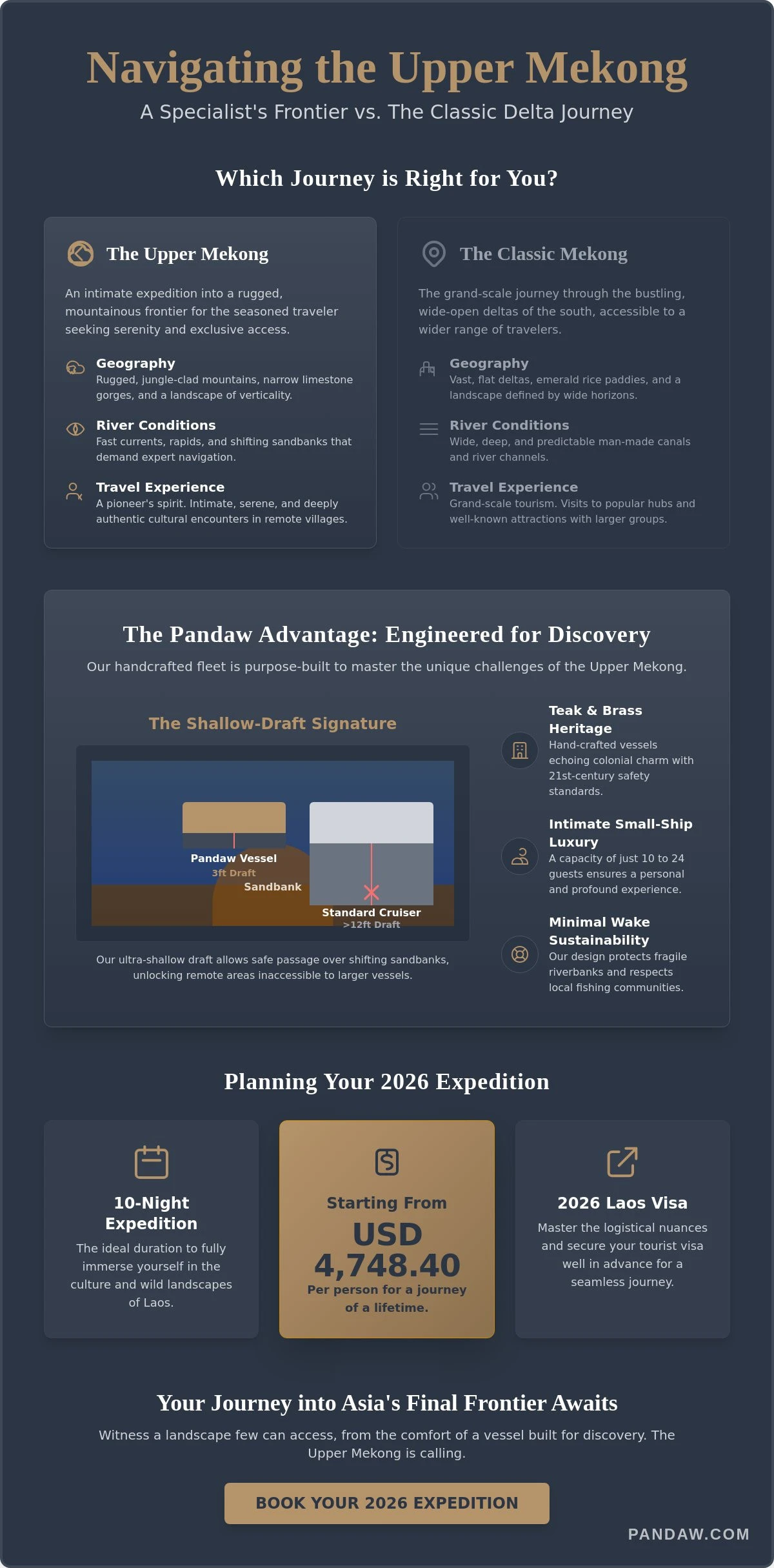
The journey begins where the borders of Thailand, Laos, and Myanmar converge, a place known historically as the Golden Triangle. To understand the upper Mekong, one must look beyond the postcard images of the flat, emerald rice paddies found in the Vietnamese delta. Here, the water carves through limestone karsts and dense jungle, creating a landscape defined by verticality rather than horizons. The upper mekong is a mountainous, rapid-filled artery through the Annamite Range. This is a region for the seasoned traveler who seeks the serenity of silence over the bustle of popular hubs, where the river's path is dictated by ancient geological shifts rather than man-made canals.
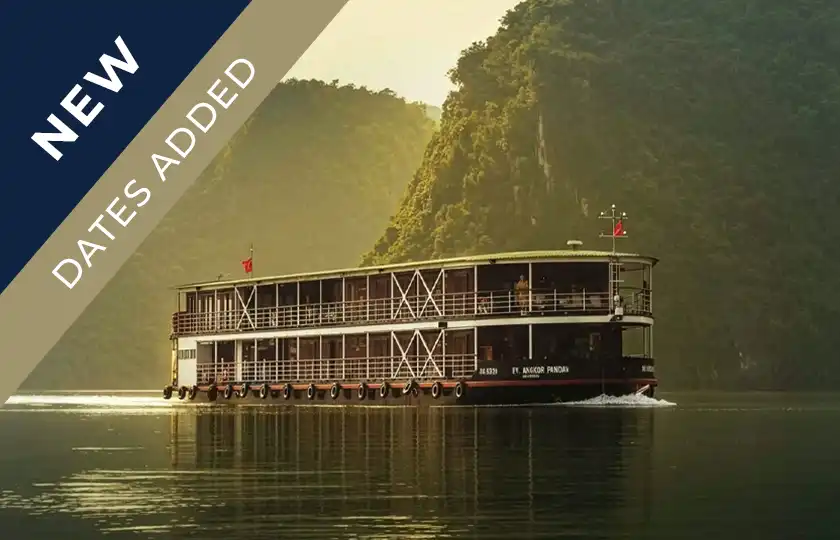
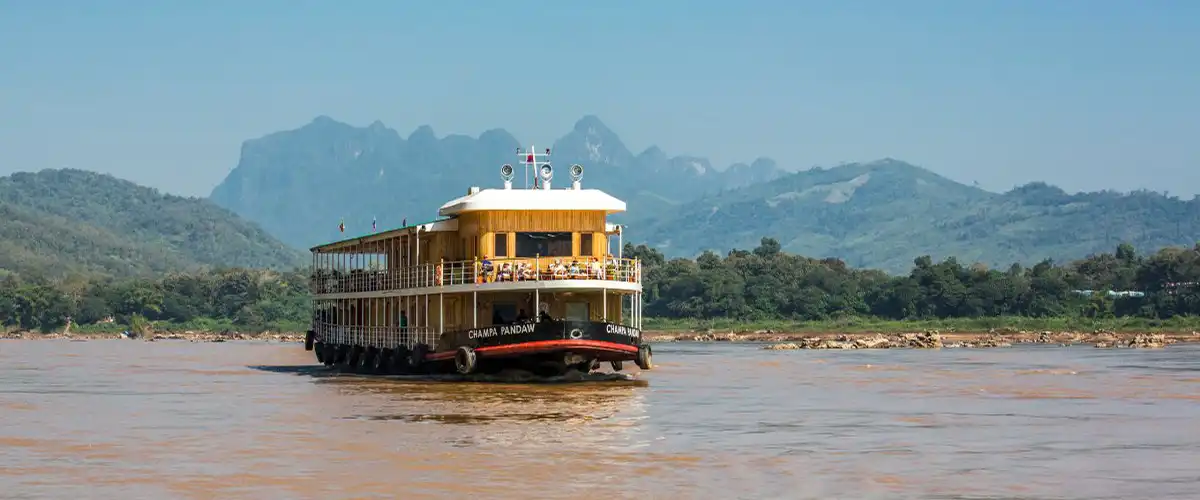
A deep dive into Mekong River geography reveals that the upper basin accounts for a significant portion of the river's dramatic elevation drop. This creates a technical challenge that many cruise operators cannot meet. While larger vessels are restricted to the wide, predictable stretches of the south, Pandaw's shallow-draft ships are designed to navigate the tight bends and rocky outcrops that characterize the heart of Laos. For the cultured explorer, the appeal lies in this very exclusivity, the knowledge that you're witnessing a landscape few others can access.
Seasonal Rhythms of the River
Navigating the mountainous north requires an intimate knowledge of the river’s changing personality. During the high water season, the current is powerful, and the landscape is a vibrant, saturated green. In the low water months, the river retreats to reveal dramatic rock formations and hidden sandbanks that demand expert pilotage. The stretch between Luang Prabang and Vientiane is particularly dynamic, shifting from narrow, cliff-lined gorges to wider, sun-drenched valleys. Pandaw’s ability to offer expeditions in this challenging environment is a marker of technical superiority. Our vessels don't just sail the river; they respect its seasonal rhythms, ensuring the spirit of the expedition remains uninterrupted even when the water levels drop.
Upper vs. Lower Mekong: Which Journey is Right for You?
The Mekong is a river of two distinct souls. Deciding between the northern and southern reaches is less about choosing a destination and more about selecting a state of mind. The southern stretch is covered on our Classic Mekong journey and takes guests through the vibrant, high-energy landscapes of Vietnam and Cambodia. Here, life is lived on the water; floating markets, bustling delta towns, and the somber, profound history of the 20th century take center stage. It's a route defined by the architectural majesty of Angkor Wat and the colonial charm of Phnom Penh.
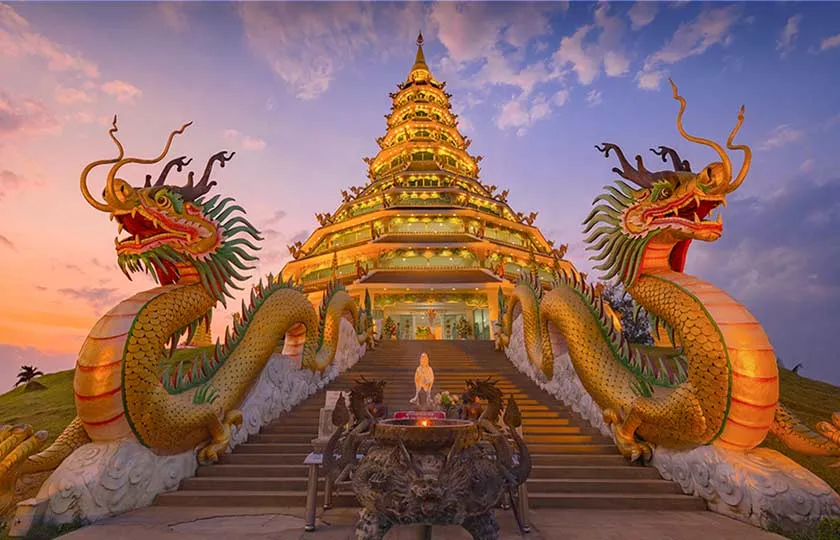
In contrast, the upper mekong provides a sanctuary of mist-covered peaks and jungle-shrouded silence. This is where the river sheds its commercial skin and becomes a wild, spiritual artery through the heart of Laos. While the south is a tapestry of diverse religious and colonial influences, the north is deeply rooted in the meditative rhythms of Theravada Buddhism. An Upper Mekong expedition offers a window into this world, where daily life revolves around the village temple and the seasonal rise and fall of the water.
The Onboard Experience
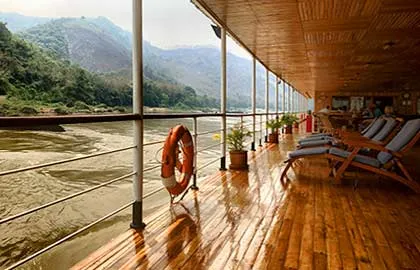
While some operators prioritize indoor Jacuzzis or modern "bling," we believe the true soul of a river journey lies in its tactile authenticity. Our ships are hand-crafted from sustainable teak and polished brass, materials that grow more beautiful with age and resonate with the natural surroundings of the upper mekong. This is understated luxury. It’s the feeling of cool wood underfoot and the scent of the river at dawn. We don't need to boast because our thirty-year legacy as pioneers of these waters speaks for itself. Our vessels are designed to be an extension of the landscape, not an intrusion upon it.
Central to our philosophy is the "Master Storyteller" approach. Your guides aren't mere translators; they're locals with deep roots in the riverbank communities. They share personal histories and cultural nuances that no guidebook can replicate. To deepen this context, an onboard historian often accompanies our expeditions, helping to weave together the complex threads of Southeast Asian heritage. This intellectual depth ensures that every bend in the river comes alive with meaning, transforming a simple cruise into a profound educational experience.
Dining on a Pandaw is a continuation of the exploration. We bring the flavors of the riverbank directly to the teak dining room, using ingredients sourced from the very village markets we visit during the day. Whether it’s a fragrant Laotian herb salad or fresh river fish prepared with local spices, every meal is designed to connect you more deeply with the region. This "river-to-table" approach supports local farmers and provides guests with an authentic taste of the mountains.
Cultural Immersion and Local Impact
We maintain a strict commitment to regional economic support, hiring our crew entirely from the countries we sail through. This creates a genuine sense of hospitality that feels like being a guest in a private home. Our encounters are designed to be authentic and respectful; we visit schools and artisans where our presence provides tangible support through the Pandaw Clinics. Since its inception, this charity has funded clinics and educational programs in remote areas, ensuring your journey contributes to the well-being of the communities that welcome us.
Life on the Sun Deck
The rhythm of the river is best experienced from the sun deck, where scenic cruising becomes a form of meditation. As the sun dips behind the limestone karsts, we continue the grand maritime tradition of sunset cocktails. It’s a moment of quiet reflection and shared stories before an open-air dinner under the stars. If you’re ready to experience this intimate way of travel, you can book your Upper Mekong expedition and start your own story. The combination of fresh air, serene silence, and attentive service creates an environment where relaxation and discovery coexist perfectly.
Frequently Asked Questions
Is the Upper Mekong safe for older travellers?
Yes, expeditions on the upper mekong are designed with mature travelers in mind. We maintain high crew-to-guest ratios to ensure attentive assistance at all times. While the terrain in remote villages can be uneven, our crew provides physical support during all shore excursions. Our vessels meet modern safety standards while preserving their 19th-century charm. We recommend a baseline level of fitness for the light trekking involved in visiting waterfalls and hill tribe communities.
What is the best month to cruise the Upper Mekong in Laos?
October through February is the optimal window for cruising. These months offer cooler temperatures and lush, post-monsoon landscapes. During this period, the river remains high enough for our shallow-draft vessels to navigate the narrowest gorges of the Laos Mekong with ease. Travelers should be mindful that March often brings haze from local agricultural burning. Booking for the late 2026 season ensures the best balance of scenic beauty and climate comfort.
How does the Upper Mekong differ from the Mekong Delta in Vietnam?
The geography shifts from the flat, bustling agricultural plains of the Vietnamese delta to a rugged, mountainous frontier in the north. While the lower reaches focus on floating markets and colonial history, the upper mekong is defined by limestone karsts and the quiet spiritualism of Theravada Buddhism. It’s a journey for those seeking solitude and raw natural beauty rather than the high-energy commerce found in the southern waterways of Vietnam and Cambodia.
Can I book a private charter for the Upper Mekong?
Yes, we offer private charters for those seeking an exclusive experience for families or corporate groups. Our fleet of small ships, such as the 10-cabin Laos Pandaw, is perfectly sized for intimate takeovers. This allows for a completely tailored itinerary and the undivided attention of our master storytellers. It’s the ultimate way to experience the river’s secrets with a hand-picked group of fellow explorers without the presence of other guests.
Are visas required?
Most travelers require a visa for both Thailand and Laos when navigating the Golden Triangle. A Laos tourist visa is available on arrival at certain ports for a fee of USD 30 to USD 45, payable in cash. Alternatively, an eVisa can be obtained in advance through the official government website. Your passport must have at least six months of validity and two blank pages to accommodate the necessary entry and exit stamps.
What is included in the Pandaw expedition cruise fare?
Our expedition fares cover entrance fees, expert guide services, and all main meals served in our open-air dining rooms. Local mineral water, coffee, and teas are included, along with gratuities to the crew. The fare excludes international flights, port dues, laundry, and visa costs. For a 10-night journey starting in October 2026, the price begins at USD 4,748.40 per person, reflecting our commitment to all-inclusive, understated luxury on every voyage.
How many people are typically on a Pandaw Upper Mekong cruise?
Intimacy is a hallmark of our service, with guest counts typically ranging from 20 to 48 people depending on the vessel. The Laos Pandaw is our most intimate option with only 10 cabins. This small-ship approach ensures that you aren't just another tourist. You're part of a select group of cultured explorers uncovering the river’s hidden tales alongside our dedicated historians and expert local guides.
Is there Wi-Fi available on the remote stretches of the Laos Mekong?
Connectivity is limited in the remote mountainous regions of northern Laos. Guests should expect intermittent Wi-Fi access throughout the journey. While we provide satellite-based internet when possible, the deep gorges and dense jungle often block signals for extended periods. We encourage travelers to embrace this digital detox as part of the expedition experience. It allows for a deeper connection with the landscape and the rhythmic, slow pace of the river's daily life.