Halong Bay & the Red River: An Expedition Through Northern Vietnam
There are rivers that invite exploration, and then there are rivers that resist it. Northern Vietnam’s waterways belong to the latter. Beyond the limestone peaks of Halong Bay lies a shifting network of shallow channels, hidden tributaries, and remote river communities that most cruise vessels cannot reach. While millions visit the coast each year, far fewer journey inland along the Red River, where the rhythm of life is shaped by the water itself. For over 30 years, Pandaw Cruises has built its expeditions around accessing these harder-to-reach waterways, using shallow-draft ships inspired by the historic Irrawaddy Flotilla Company to navigate a part of Vietnam that remains deeply connected to its traditions, crafts, and river culture.
The Challenge of Navigating Northern Vietnam’s Waterways
The Red River Delta is a restless landscape of silt and sediment. Unlike the deep, predictable harbors of the coast, these inland channels are defined by shifting sandbanks and seasonal fluctuations that demand specialized knowledge. Most travelers visiting Halong Bay & the Red River only see the former, as the towering karst formations are easily reached by standard vessels. However, the river itself remains a frontier. Traditional luxury cruisers, with their deep keels and heavy drafts, find themselves confined to the deep-water ports, unable to penetrate the shallow arteries that lead to the tribal heartlands of the north.
How does a ship overcome such obstacles? The answer lies in a maritime legacy that began on the Irrawaddy in the 19th century. Pandaw's fleet is designed with the same pioneering spirit, utilizing a specific hull design that prioritizes a shallow footprint with the technical capability to navigate a living, breathing river system that changes with every monsoon. Infrastructure along the Red River is often rudimentary, with temporary piers and basic wharves that require a nimble, expert touch to approach safely.
From the Bay of Descending Dragons to the Highland Interior
The transition from the salt spray of the Gulf of Tonkin to the emerald silt of the delta marks a change in perspective. While the Halong Bay** **& the Red River expedition begins amidst the vertical grandeur of limestone karsts, the scenery soon softens into the horizontal tapestry of Northern Vietnam's rice paddies. This shift is best experienced from the deck of a small ship, where the monumental scale of the coast gives way to the daily rhythms of river life. As we leave the sheltered waters of Coconut Beach and navigate into the Kinh Thay River, the air changes, carrying the scent of woodsmoke and damp earth from the banks.
The Lore of Halong Bay
Our journey commences within a labyrinth of nearly 1,500 islands, a landscape so geologically significant it is recognized as a UNESCO World Heritage site. Local mythology tells of a great dragon that descended from the heavens, its thrashing tail carving out the valleys that now form the bay. In the morning mist, these ancient towers of stone appear as ghost ships on the horizon, providing a dramatic backdrop for our first days at sea. It's an atmospheric introduction that anchors the traveler in the deep history of the region before we turn our bow inland toward the hidden interior.
Sailing Deep into Highland Vietnam
For the 2026 season, we navigate toward Viet Tri, the historic confluence where three major rivers meet. This area serves as a gateway to the highland tribal regions, where the river narrows, and the banks rise into steep, forested hills. Here, the water is a conduit to remote mountain villages that remain largely inaccessible to the land-bound traveler. Hanoi remains the strategic hub of this expedition, a city of colonial charm and bustling trade that bridges the gap between the ancient delta traditions and the rugged spirit of the highlands.
If you're ready to see these landscapes for yourself, you can explore our full range of river expeditions to find the right departure for your journey.
The Rhythm of Life Along the Red and Black Rivers
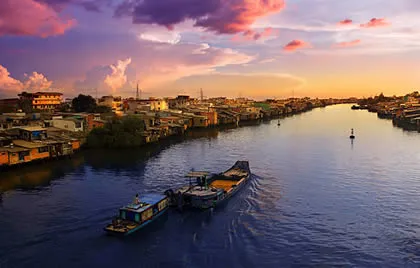
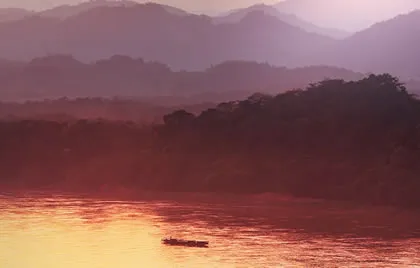
Early mornings on the water bring silence. A thick morning mist often clings to the surface, obscuring the banks until the first rays of sun break through. When the golden light finally touches the river, it reveals a world that has changed little over the centuries. You'll see fishermen casting nets from narrow sampans and farmers tending to the fertile, silt-rich soil of the delta. This slow pace of life defines the journey through Halong Bay & the Red River.
Artisans and Ancient Traditions
The delta's heritage is etched into the crafts of its people. In Bat Trang, the history of ceramic making stretches back over 1,000 years, with families passing down techniques that define the region's artistic identity. Walking through the village, you can feel the cool dampness of the clay and watch as master potters shape vessels with practiced ease. Further upstream, the village of Co Chat offers an encounter with Northern Vietnam's silk industry. Here, the rhythmic clatter of looms fills the air as artisans transform raw cocoons into shimmering threads of silk. It’s a close look at the stories of local families whose lives are inextricably linked to the river’s bounty.
Spiritual Landscapes and Temples
Architecture along the riverbanks reflects a complex history of faith and colonial influence. Hanoi's ancient pagodas stand in quiet contrast to the bustling city streets, while the rural landscape is dotted with hidden shrines and communal houses. One of the most striking landmarks is the Phat Diem Cathedral. Built in the late 19th century, its unique stone architecture blends traditional Vietnamese temple styles with Gothic European elements. This fusion of cultures creates a spiritual atmosphere that is both grand and deeply local.
The Pandaw Experience: A Handcrafted 2026 Journey
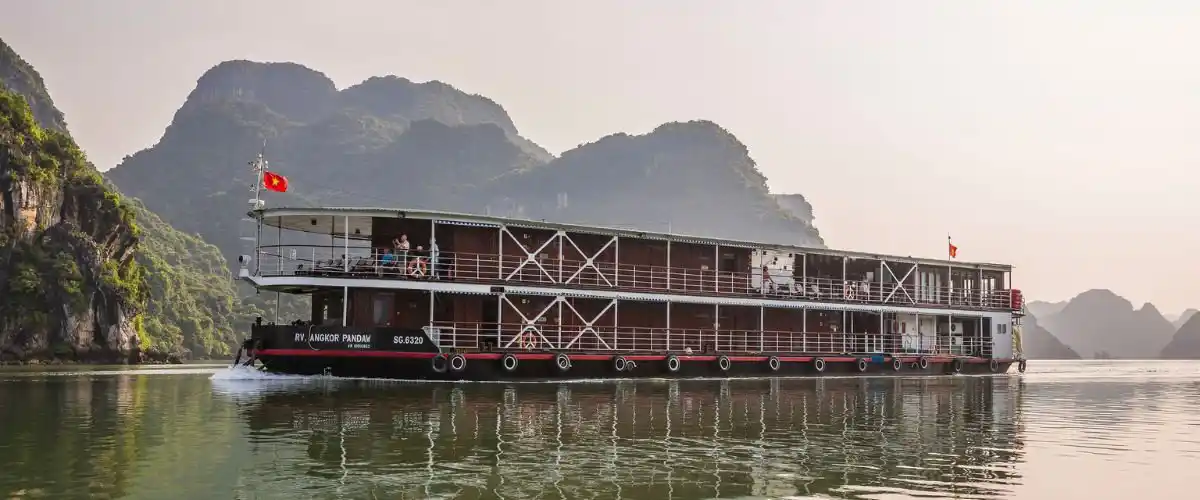
The RV Angkor Pandaw is a vessel built for those who value privacy and depth over spectacle. With only 16 staterooms, the ship offers an environment that feels more like a private club than a commercial cruiser. Every inch of the ship reflects a commitment to heritage, from the hand-finished teak decks to the polished brass fittings that catch the afternoon sun. This craftsmanship is a continuation of the maritime tradition established by the Irrawaddy Flotilla Company, designed to evoke the quiet romance of early river travel.
Our philosophy centers on a no-staged luxury approach. We don't believe in artificial entertainment or curated performances that distance you from the local culture. Instead, the luxury is found in the silence of the river, the quality of the service, and the authenticity of the places we visit. It's about the people and the stories that make Halong Bay & the Red River special. This focus ensures that your presence on the river is respectful and your connection to the community is meaningful.
Intimacy on the Water
The small scale of our ships fosters a natural sense of community among travelers. You'll find yourself in the company of curious, culturally engaged explorers who share your passion for discovery. Our expert local guides are also a vital part of this experience, providing deep regional insights that go far beyond a standard guidebook. They act as your bridge to the local communities, explaining the nuances of spiritual traditions and the history of ancient trade routes that once defined the delta's economy.
Planning Your 2026 Expedition
Timing your journey is key to experiencing the atmospheric beauty of Northern Vietnam. For those seeking the best conditions for photography, the 2026 departures in May, September, and November offer distinct shifts in light and landscape. Whether you're looking for the lush greens of the post-monsoon season or the crisp air of late autumn, each month provides a unique perspective on the delta.
For a more extensive exploration of the region's waterways, you may wish to consider the Halong Bay & Red River / Laos Mekong combo.
Frequently Asked Questions
What is the best time of year to cruise Halong Bay and the Red River?
The best time to experience Halong Bay & the Red River is during the spring and autumn months when the weather is most favorable for river navigation. Departures in May and September offer lush green landscapes after the rains, while November provides cooler, crisp air and clear skies. These periods avoid the extreme heat of summer and the heavier rains of the monsoon, ensuring the water levels are ideal for our shallow-draft vessels to reach remote inland villages.
How many nights is the typical Red River expedition?
Our typical expedition through Northern Vietnam is a 10-night journey that allows for a slow exploration of the region. This duration is carefully planned to balance the dramatic coastal scenery of the bay with the intricate, lesser-visited waterways of the Red River. It provides enough time for travelers to immerse themselves in the local rhythm of life without feeling rushed, moving from the sea to the highland interior.
Are the Pandaw vessels suitable for travelers with limited mobility?
While our ships are designed for comfort, they may present challenges for travelers with limited mobility. Due to the heritage design of our vessels, there are often steep stairs between decks and no elevators. Many excursions involve walking on uneven village paths or using small local tenders to reach the shore. We recommend that guests possess a reasonable level of fitness to fully enjoy the remote locations and cultural encounters we provide.
Do I need a visa for the Halong Bay and Red River expedition?
Most international travelers require an e-Visa to enter Vietnam for a 2026 expedition. Current regulations state that a single-entry e-Visa costs USD 25 and is valid for up to 90 days. You'll need a passport with at least six months of validity and a digital photo for the application. We suggest applying through the official government portal well in advance to ensure a smooth journey through Halong Bay & the Red River.