In the world of high-end travel, the most exclusive destination is no longer a five-star hotel, but a remote village that doesn't appear on any standard map. While many travelers seek the grandeur of the Far East, they often find themselves trapped in the shadow of massive liners that clog major ports. True luxury small ship cruises asia offer a different path; they swap thousands of passengers for a handful of like-minded explorers. By 2026, the definition of luxury has shifted from gold-plated fixtures to the quiet prestige of a shallow-draft vessel that can navigate the narrowing bends of the Upper Mekong or the sacred, silt-heavy waters of the Ganges.
You likely feel that a journey should be a connection rather than a spectacle, and you're right to be wary of the overtourism currently straining Asia's coastal hubs. This guide will help you identify the perfect intimate vessel to navigate these hidden waterways and remote cultural heartlands. We'll explore the technical advantages of hand-crafted, pioneering ships, the nuances of all-inclusive 14-night expeditions on the Ganges starting from USD 9,147.60, and how to secure exclusive access to UNESCO sites far beyond the reach of the deep-drafted fleet.
Key Takeaways
- Understand why luxury small ship cruises asia prioritize vessels with under 60 guests to bypass crowded industrial ports and reach remote villages.
- Discern the value of handcrafted heritage by choosing colonial-style teak and brass vessels that reflect local maritime history over generic modern yachts.
- Compare the unique characters of the Mekong, Ganges, and Brahmaputra to select a route that aligns with your interest in spiritual odysseys or classic cultural exploration.
- Learn how to navigate the complexities of the monsoon cycle and seasonal water levels to ensure your ship can reach the furthest navigable points of the river.
- Discover how shallow-draft technology provides exclusive access to inland communities that remain inaccessible to larger, deep-drafted luxury liners.
Defining Small Ship Luxury: Why Scale is the Ultimate Amenity in Asia
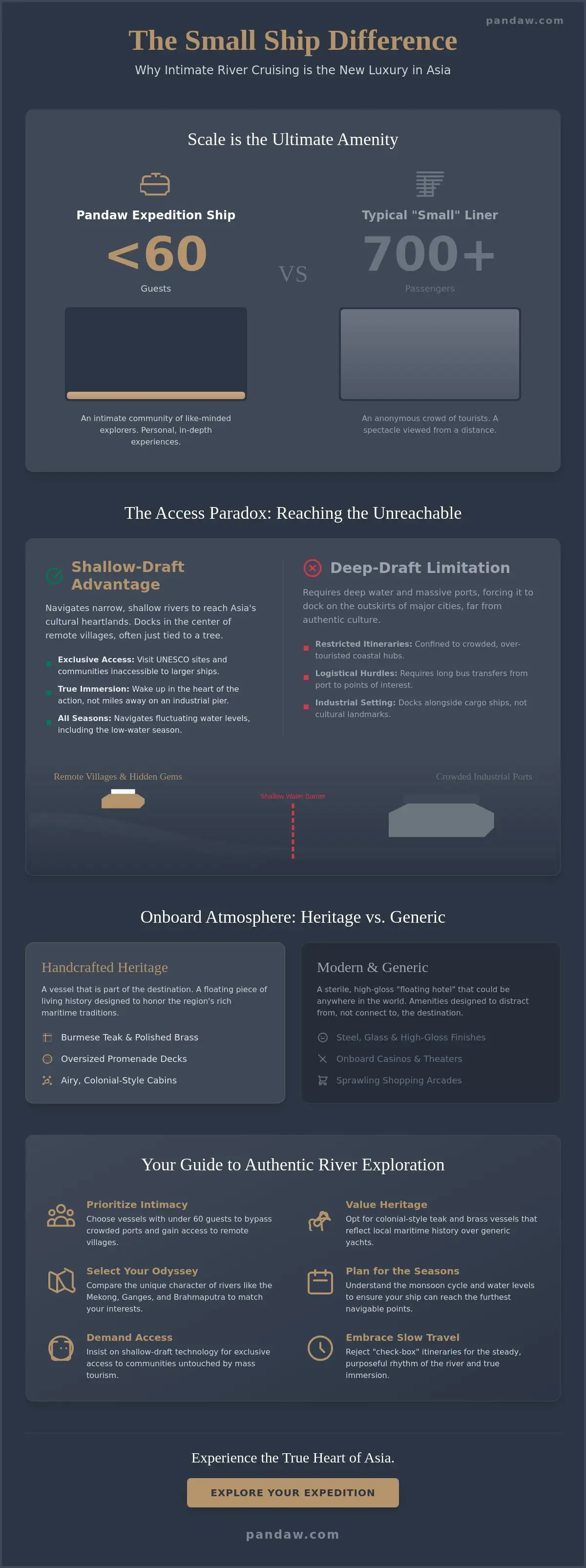
In the travel industry, "small" is a relative term that often masks a crowded reality. Many luxury operators define a small ship as a vessel carrying 500 to 700 passengers, yet these liners still require massive concrete piers and industrial port infrastructure. For the discerning traveler, luxury small ship cruises asia are defined by a far more intimate scale, specifically vessels carrying fewer than 60 guests. This distinction isn't merely about numbers; it's about the "Access Paradox." When a ship is too large, it's forced to dock in the industrial outskirts of Ho Chi Minh City or Bangkok, miles away from the cultural pulse of the region. A genuine river vessel berths in the heart of the village, tied to a teak tree or a simple wooden jetty.
As we move through 2026, the trend of "Slow Travel" has matured from a niche preference into a primary requirement for the connoisseur. It's a rejection of the "check-box" itinerary. Instead of rushing between major hubs, travelers seek the steady, purposeful rhythm of the river. This intimacy transforms the onboard atmosphere from a crowd of anonymous tourists into a community of explorers who share a genuine curiosity for the remote heartlands of Asia. This year, the focus has shifted toward depth of experience, where the luxury of time is complemented by the luxury of space.
Ocean vs. River Small Ships: Understanding the Difference
Ocean-going small ships focus on coastal connectivity, often prioritizing onboard amenities like expansive spas or casinos to fill the time between ports. In contrast, a River cruise is designed for constant immersion. The vessel serves as a moving observatory for the inland heartlands. The technical secret lies in the "Shallow Draft" advantage. While ocean liners need deep water, a specialized river fleet can navigate narrow channels and survive the fluctuations of low-water seasons. This allows travelers to reach villages in the Upper Mekong or the Brahmaputra that remain entirely inaccessible to anything but the smallest, most agile craft.
The Psychology of the Boutique Cruise
The modern traveler is moving away from "floating hotels" toward dedicated expedition vessels. There's a profound psychological shift in knowing the captain by name and benefiting from an open-bridge policy where the mechanics of navigation are shared rather than hidden. It's about authentic interaction with a crew that treats you as an insider rather than just another cabin number. True luxury river cruising is the intersection of colonial heritage and modern comfort. By removing the barriers of scale, you don't just see the river; you become part of its story.
Handcrafted Heritage vs. Modern Yachts: Choosing Your Onboard Atmosphere
The choice between a modern yacht and a heritage vessel isn't just about aesthetics; it's about how you feel connected to the destination. Many travelers are torn between the sterile, high-gloss finish of modern steel yachts and the warm, evocative character of heritage vessels. In the niche of luxury small ship cruises asia, the design of the ship serves as a vital bridge to the past. While a modern yacht might offer "intuitive service" in a setting that feels like a generic city hotel, a handcrafted vessel uses Burmese teak, polished brass, and local silks to ground the experience in the region's rich maritime history. These ships are designed as a revival of the great river traditions, where the vessel itself is a piece of living history.
On a boutique vessel with under 60 guests, the space ratio per traveler is significantly higher than on larger liners. Because we don't include casinos, theaters, or sprawling shopping arcades, that square footage is redirected into oversized promenade decks and airy, colonial-style cabins. This design philosophy honors the environment, creating a ship that feels like it belongs on the water. The Mekong River Commission often highlights the delicate balance of these ecosystems; a balance that is best respected by ships built with local materials and specialized shallow drafts. If you value substance over spectacle, you might find that our handcrafted colonial-style ships offer the perfect vantage point for your next expedition.
The "Teak and Tales" Philosophy
A ship’s design should enhance the storytelling of the journey rather than distract from it. This is why we prioritize an onboard historian over a cruise director. Instead of "forced entertainment" like neon-lit shows or slot machines, luxury is found in a quiet lecture on the deck or a deep conversation about regional context. This lack of distraction leads to a level of relaxation that modern, busy ships simply cannot replicate. The "Teak and Tales" approach ensures that your time on the water is as intellectually stimulating as it is restful.
Service with a Local Soul
International crews on large ships often provide a standardized, detached version of luxury. In contrast, locally-hired teams offer a genuine cultural connection. With a high crew-to-guest ratio, often approaching one crew member for every 1.5 guests, the service is both attentive and deeply personal. These crew members are often from the very riverside communities you visit, facilitating interactions that feel like a meeting of friends rather than a tourist transaction. Their local knowledge ensures that every shore excursion is an authentic encounter with the "real" Asia.
Navigating Asia’s Great Arteries: Comparing the Mekong, Ganges, and Brahmaputra
Selecting the right waterway is the most critical decision for any cultured explorer. While the rivers of Asia share a common thread of life, their characters vary wildly. For those seeking the gold standard of luxury small ship cruises asia, the choice often comes down to the cultural tapestry of Indochina or the profound spirituality of the Indian subcontinent. Each artery offers a different rhythm, from the bustling markets of the Mekong Delta to the silent, mist-covered banks of the Brahmaputra. Understanding these nuances ensures your 2026 expedition aligns with your personal travel philosophy.
Mekong: The Gateway to Indochina
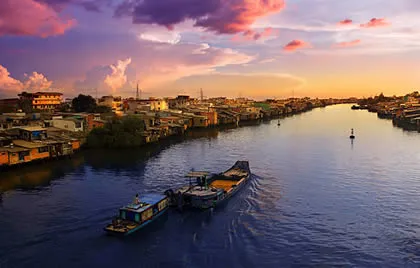
The "Classic Mekong" remains the definitive entry point for first-time river travelers. This journey through Vietnam and Cambodia offers a masterclass in contrast, moving from the lush, emerald rice paddies of the Delta to the haunting grandeur of the temples at Angkor. Recent travel insights highlight how luxury vessels, often designed with local heritage in mind, provide a sanctuary from the heat and hustle of the shore. A key highlight is Phnom Penh, where the sobering modern history of the Khmer Rouge era meets the architectural elegance of the Royal Palace. It's a route that balances profound education with immense physical beauty.
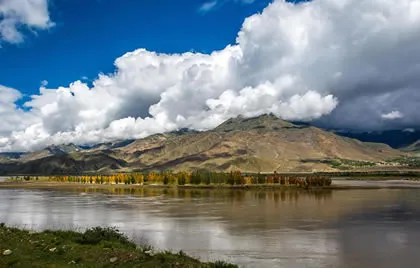
For those who have already experienced the southern reaches, the Upper Mekong and the Laos Mekong offer a more rugged, mountainous perspective. These northern routes are defined by limestone cliffs and remote villages where life is dictated by the river's flow rather than the clock. It's a slower, more contemplative experience that appeals to the seasoned pioneer.
The Indian Rivers: Spirituality and Wilderness
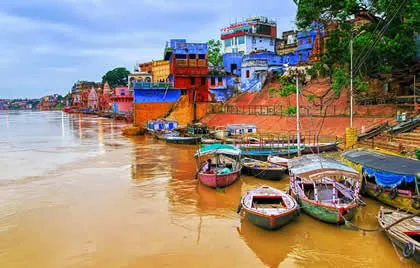
India's waterways offer a more visceral experience. The Ganges is not merely a river; it's a living deity. Travelers often distinguish between the Lower Ganges, known for its colonial heritage and artisanal villages, and the Upper Ganges, which serves as a gateway to India’s spiritual heartlands. For a detailed breakdown of these routes, our Ganges River Cruise Guide provides essential context on the best times to visit and what to expect from the local regulations.
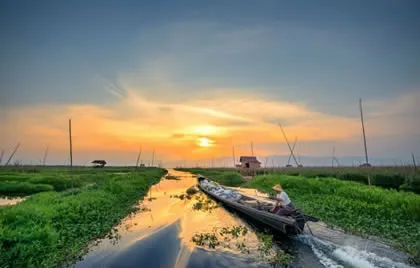
If you prefer the "wild" frontier, the Brahmaputra acts as a floating safari. Here, the focus shifts to the natural world, with excursions into Kaziranga National Park where the one-horned rhinoceros still roams. It's a journey through sprawling tea estates and remote tribal lands that feels worlds away from the modern era. The river itself is fast-flowing and ever-changing, making every voyage a true expedition.
Finally, Northern Vietnam’s Red River offers a different emerald landscape. This region is famous for its artisanal traditions, such as water puppetry and ceramic making, which have remained unchanged for centuries. It's the perfect choice for those who seek a quieter side of Vietnam, away from the primary tourist trails.
Planning Your Expedition: Seasonal Windows and Itinerary Selection
Success in luxury small ship cruises asia depends on understanding the seasonal heartbeat of the region. Unlike ocean travel, where ports remain static, river cruising is a dynamic dialogue with nature. The monsoon cycle dictates the draft of the vessel and, consequently, the depth of your access to remote villages. Planning for 2026 requires a strategic look at these cycles to ensure you're witnessing the landscape at its most evocative. This flexibility is why luxury small ship cruises asia are becoming the preferred choice for those who value authenticity over a rigid timetable.
High water season, typically from mid-August through November, offers a different perspective of Tonle Sap Lake on the Mekong. Conversely, low water seasons might require more nimble navigation but often reveal hidden sandbanks and closer views of riverbank life. A 7-night expedition has emerged as the "sweet spot" for most travelers. It provides enough time to shed the stresses of modern life and sink into the "Teak and Tales" rhythm without the logistical fatigue of longer journeys. To maximize your journey, consider pre-cruise hotel packages in Saigon or post-cruise hotel packages in Kolkata. These extensions allow you to transition from the high-energy urban centers of Asia to the tranquil, slow-paced world of the river.
The Best Time to Cruise Asia in 2026
The "Cool Season" from October to March is the most popular window, offering comfortable temperatures for exploring temples and markets. However, the "Green Season" between May and August shouldn't be overlooked. During these months, the landscapes are incredibly lush, and the absence of large tour groups creates an even more intimate atmosphere. Water levels dictate the itinerary more than the calendar. In India, be mindful that fog can affect Ganges cruises in December and January, requiring a flexible and adventurous spirit.
Solo Travellers and Private Charters
The boutique nature of our fleet fosters a natural community, making it an ideal choice for those traveling alone. For 2026, select dates on the Brahmaputra River offer a 20% discount and no single supplement, removing the traditional financial barrier for solo explorers. For those seeking absolute exclusivity, Private Charters are increasingly popular for multi-generational families or corporate retreats. Booking a private vessel allows for a bespoke Asian gala or a tailored itinerary that reflects your family's unique heritage. If you're ready to plan your 2026 journey, explore our Pre-Cruise Hotel Packages to begin your immersion early.
The Pandaw Difference: Pioneering Remote River Exploration
Pandaw isn't a newcomer to these waters; it's a revival of a grand maritime tradition that dates back to the original Irrawaddy Flotilla Company. Over the last 30 years, we've pioneered routes that were previously considered impassable, cementing our reputation as a master storyteller of the river. While other operators focus on building larger, flashier vessels, we've remained committed to our signature shallow-draft technology. This technical superiority is the reason why we remain the benchmark for luxury small ship cruises asia, providing a gateway to the continent's most secluded corners in the Upper Mekong and the Red River where larger ships simply cannot go.
We embrace a philosophy of "No-Star" luxury. This doesn't mean a lack of comfort; rather, it's a rejection of the generic corporate ratings that often prioritize marble lobbies over meaningful experiences. On a Pandaw vessel, luxury is found in the hand-crafted teak decks, the attentive service of a local crew, and the quiet prestige of being an "insider" in a remote land. Our commitment extends beyond the ship through the Pandaw Charity, which currently supports 17 clinics and numerous schools across the regions we visit. When you travel with us, you're not just a tourist; you're contributing to the sustainable development of the very villages that welcome you.
Uncovering Hidden Temples and Remote Villages
Our smaller vessels allow for a level of intimacy that's impossible on a 500-passenger liner. In the remote reaches of Laos or the winding channels of the Red River, we moor at villages that see fewer than 100 visitors a year. You might find yourself sharing tea with a master silk weaver or exploring a 12th-century temple hidden by jungle growth, far from the polished tourist trails. These encounters are unscripted and authentic. Because we use handcrafted ships built to traditional designs, we can navigate the seasonal shifts of the river with a grace that modern steel yachts can't match, making us the definitive choice for luxury small ship cruises asia in the 2026 season.
Booking Your 2026 Asian Expedition
The demand for intimate, off-the-beaten-path travel is at an all-time high. To secure your preferred cabin on our most popular 2026 departures, we recommend booking 12 to 18 months in advance. Our fares are comprehensively all-inclusive, covering everything from gourmet meals and local drinks to expert-led shore excursions and transfers. This transparency allows you to focus entirely on the journey itself. If you're ready to step away from the crowds and into the heart of the continent, it's time to Explore our 2026 Asian River Expeditions and join a legacy of pioneering exploration.
Embarking on a New Era of River Exploration
Choosing the right vessel is the final bridge between being a spectator and an active participant in Asia's living history. The most rewarding luxury small ship cruises asia offer in 2026 are defined by the intimacy of a sub-60 guest count and the technical superiority of a shallow draft. These design choices ensure your journey reaches the silent temples and vibrant riverside communities that remain entirely hidden from the deep-drafted ocean fleet. By prioritizing heritage over generic modernism, you secure a vantage point that is as culturally significant as the destinations themselves.
With a 30-year legacy of pioneering these waterways, our expeditions remain rooted in authenticity and guided by expert local historians who bring every bend of the river to life. Whether you seek the spiritual cradle of the Ganges or the emerald landscapes of the Red River, the right ship acts as your private gallery to the continent's most remote heartlands. It's time to step away from the crowded ports and rediscover the soul of the East from the deck of a handcrafted vessel. View our handcrafted 2026 Asia River Expeditions and begin your next chapter of discovery. The river is waiting to share its stories with you.
Frequently Asked Questions
What is the best month for a luxury small ship cruise in Asia?
The optimal window for luxury small ship cruises asia is the cool season, which spans from October to March. During these months, the humidity is significantly lower and temperatures are milder, making land explorations of temples and villages far more comfortable. December and January are particularly popular for their clear skies, though travelers on the Ganges should prepare for seasonal morning fog that can occasionally shift sailing schedules.
Do I need a visa for a Mekong or Ganges river cruise?
Most travelers require separate visas for Vietnam, Cambodia, and India, depending on their nationality and the specific itinerary. For a Mekong journey, you'll typically need a visa for both Vietnam and Cambodia; many guests utilize e-visa portals which often process within three to five business days. India requires a specific e-Tourist visa that must be secured well in advance of your Ganges or Brahmaputra expedition to ensure smooth boarding.
Are small ship cruises in Asia suitable for people with limited mobility?
Traditional river vessels often present challenges for those with significant mobility restrictions because of steep gangways and the lack of onboard elevators. Shore excursions frequently involve uneven terrain, small local transfer boats, or walking through rural villages without paved paths. It's essential to consult with our specialists to discuss the specific physical requirements of your chosen itinerary, as the adventurous nature of these expeditions requires a certain level of agility.
What is the difference between a river cruise and an ocean cruise in Asia?
The primary distinction lies in the access to inland heartlands versus deep-water coastal ports. River cruises prioritize cultural immersion and daily village visits, whereas ocean cruises focus on onboard amenities and major city hubs. A river vessel’s shallow draft allows it to berth in remote, rural areas where 500-passenger ships simply cannot reach, offering a more intimate and authentic connection to the local culture.
What should I pack for an Asian river expedition?
Pack light, breathable fabrics like linen or cotton to manage the tropical humidity, along with sturdy walking shoes for village excursions. You'll need modest attire that covers shoulders and knees for temple visits in Cambodia, Laos, and India out of respect for local traditions. Don't forget high-factor sunscreen, a wide-brimmed hat, and insect repellent for evening sundowners on the observation deck as you navigate through lush, tropical landscapes.
Is Wi-Fi available on small ships in remote parts of Asia?
Wi-Fi is provided on board, but connectivity is often intermittent as the ship moves through remote river canyons or rural stretches. While we strive to maintain a signal in the main lounge areas, the focus of our expeditions is on disconnecting from digital noise and connecting with the environment. You shouldn't rely on high-speed streaming while navigating the deeper reaches of the Upper Mekong or the fast-flowing Brahmaputra.
How many passengers are typically on a Pandaw cruise?
Our fleet is designed for intimacy, with most vessels carrying between 30 and 60 guests at maximum capacity. This small scale ensures a high crew-to-guest ratio and allows for a quiet, communal atmosphere among like-minded travelers. It also facilitates a more respectful approach to tourism, where our arrival doesn't overwhelm the small riverside communities or delicate ecosystems we visit along the way.
Are shore excursions included in the price of a luxury Asia cruise?
Yes, all scheduled shore excursions are included in the all-inclusive price of your luxury small ship cruises asia. This includes transport by local tuk-tuks or small boats, entrance fees to UNESCO sites, and the services of our expert local guides and historians. We believe in a transparent pricing model so you can focus on the historical narratives and cultural interactions rather than the daily logistics of your journey.