The Lower Ganges: A Guide to the Hooghly’s Colonial and Spiritual Heritage
What if you could trace the rise and fall of European empires without ever stepping into a crowded city tour? Many travelers feel overwhelmed by the frantic pace of India's main tourist circuits or worry that the river's sacred sites remain out of reach for traditional vessels. You might even find yourself confused about where the main branch of the river ends and the Hooghly begins. By choosing a journey along the lower Ganges, you'll find a path where the air is quieter, and the history is etched into every terracotta temple and crumbling trading post along the bank.
We promise a deep immersion into a side of West Bengal that few others witness. This guide explores the colonial heritage of former European colonies and the remote spiritual traditions found only along these specific waters. You'll learn how navigating the Hooghly on a shallow-draft vessel allows you to step back into a world of discovery that feels entirely your own. It's an invitation to experience the intersection of expedition travel and cultural connection, far from the reach of mass-market tourism.
Defining the Lower Ganges: The Hooghly’s Unique Identity
To understand the lower Ganges, one must first look at the map where the great river divides. At the Farakka Barrage, the main channel continues into Bangladesh, while a distributary turns south toward the Bay of Bengal. This is the Hooghly River, a waterway that serves as the lifeblood of West Bengal. Unlike the vast, often unpredictable reaches of the upper river, this stretch offers an intimate perspective on the region's geography. As the vessel moves downstream, the landscape shifts from the industrial echoes of the barrage to the lush, tranquil scenes of rural India. You'll see golden mustard fields and dense mango orchards that have stood for generations, providing a backdrop to a riverbank life that remains largely unchanged.
The Hooghly is often called the River of Empires for good reason. For centuries, its banks were the primary gateway for European powers seeking a foothold in the East. This isn't a singular story of British rule; it's a tapestry of colonial ambitions. Along the Hooghly River route, you'll find the remnants of French Chandannagar, Danish Serampore, and Dutch Chinsurah. Each settlement left a mark, creating a living museum that is best explored by river cruise. The journey eventually leads to the delta of Kolkata, but the real treasure lies in the remote outposts encountered along the way.
The Sacred Connection: Why the Hooghly Matters
To the local Bengali communities, the river is a divine presence. Every morning, the ghats come alive with the rhythmic sounds of prayer and devotees performing ritual ablutions. While the ceremonies of Varanasi are famous for their scale, the rituals witnessed along the lower Ganges offer a quieter, more personal connection. Watching flickering lamps drift across the water at dusk provides a moment of profound reflection, connecting travelers to the spiritual pulse of the land.
A Tapestry of Empires: Colonial and Spiritual Heritage
During the 18th century, the Hooghly functioned as the primary artery for global commerce, transporting Bengal’s prized silk and indigo to distant markets. European powers established a series of enclaves along the banks, creating a unique corridor of colonial heritage on the Hooghly River. This wasn't merely a business venture; it was an era of architectural and cultural cross-pollination.
You'll find grand, neoclassical facades standing just a short distance from the intricate, earth-toned terracotta work of local artisans. This juxtaposition reflects the dual identity of the region, where foreign influence met deep-seated Bengali tradition. For those seeking to explore these historic enclaves in depth, our Hooghly River expedition offers an intimate look at these secluded sites.
The European Colonies: Chandernagore and Serampore
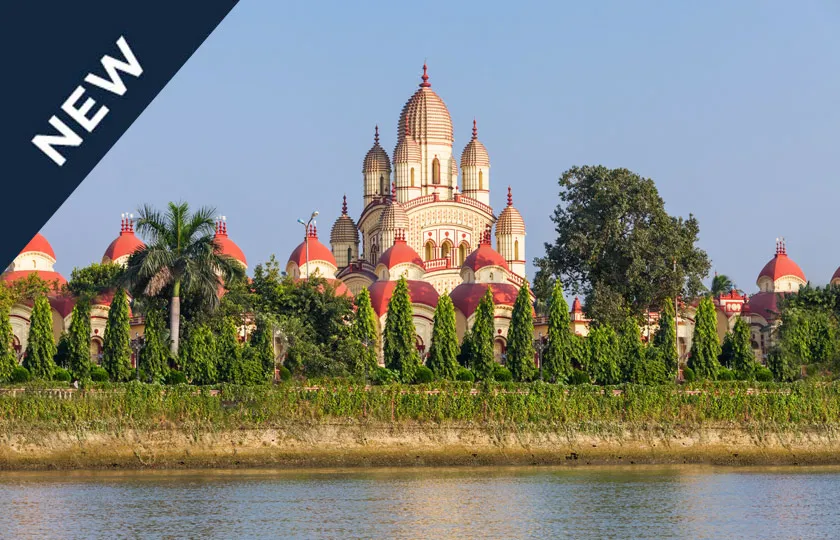
In Chandernagore, the French influence remains palpable along the riverfront promenade. The 18th-century Sacré-Cœur Church and the stately Dupleix’s House serve as reminders of a Gallic past. Further downstream, the Danish legacy in Serampore highlights a different contribution. This town became a center for early printing and education, anchored by the Serampore College, founded in 1818. It's a place where European intellectualism merged with Indian scholarship.
Terracotta and Tradition: The Temples of Kalna and Mayapur
The journey through the lower Ganges also reveals Bengal’s spiritual heart. In Kalna, the 108 Shiva temples are arranged in two concentric circles, a masterpiece of architectural precision and devotion. Each temple features fine terracotta carvings depicting scenes from ancient epics. In contrast, the spiritual energy of Mayapur represents a modern devotion. As the global headquarters of ISKCON, its vast temple complex draws thousands of pilgrims, creating a vibrant atmosphere that echoes across the water through the trees.
Practicalities of Navigating the Sacred Waterway
Planning a journey through the lower Ganges requires attention to the seasonal rhythms of the river. The ideal window for travel falls between September and April. During these months, the air is cooler, and the skies are clear, providing the soft, golden light that photographers prize. Cruising this specific waterway is a technical challenge that many larger vessels can't meet. The Hooghly is famous for its shifting sandbars and seasonal depth changes. Navigating these waters safely requires a specialized approach, moving away from mass-market tropes toward a more intimate, expeditionary style.
The Advantage of Shallow-Draft Navigation
Our fleet is designed with the heritage of the Irrawaddy Flotilla Company in mind, utilizing shallow-draft capabilities that allow us to reach remote villages inaccessible to others. These handcrafted teak and brass ships aren't just about the romance of an earlier era; they're precise tools for discovery. With a high crew-to-passenger ratio, the experience is deeply personalized. You'll find yourself stepping ashore in places where the arrival of a vessel is still a quiet, celebrated event, rather than a logistical exercise.
Beyond the Lower Ganges: Connecting the Waterways
While the lower Ganges offers a concentrated look at colonial and spiritual heritage, it's often just the beginning of a larger exploration. For a total sub-continental perspective, many travelers choose to combine their trip with the All Ganges River Cruise, which covers the full length of the sacred river. If your interests lean toward the natural world, the Brahmaputra River provides a wildlife-focused alternative. There, the focus shifts from historic cities to the untamed landscapes and national parks of Assam, offering a different but equally compelling narrative of India’s great waterways.
Frequently Asked Questions
What is the difference between the Lower Ganges and the Upper Ganges?
The distinction lies in geography and character; the Lower Ganges refers to the Hooghly River distributary in West Bengal, whereas the Upper Ganges flows through northern India toward the Himalayas. While the Upper River is vast and open, the Lower branch is tidal and intimate. It's characterized by a dense concentration of former European trading posts and intricate terracotta temples that line the lush, rural banks.
When is the best time of year to cruise the Lower Ganges?
The ideal window for cruising is from October to March when the weather is dry and temperatures are mild. During these months, you avoid the heavy monsoon rains and the intense heat of the summer season. This period also provides the best natural light for photography and comfortable conditions for exploring the historic sites and villages along the riverbanks.
Are the shore excursions on the Hooghly physically demanding?
Shore excursions are generally moderate in difficulty, involving guided walks through rural villages, temple complexes, and colonial enclaves. While the terrain can be uneven or dusty, the pace is always slow and purposeful to allow for genuine cultural immersion. Travelers should be comfortable stepping on and off smaller tender boats and walking for approximately one to two hours during a typical morning or afternoon outing.
What kind of vessels are used for the Lower Ganges expeditions?
We utilize specialized K-class vessels that feature a shallow draft specifically designed to navigate the shifting sandbars and seasonal depths of the lower Ganges. These handcrafted ships are built from teak and brass, reflecting the heritage of the original Irrawaddy Flotilla Company. Their small size allows for an intimate atmosphere and access to remote communities that larger, mass-market ships cannot reach.
Is a visa required for international travelers visiting West Bengal?
Most international visitors must obtain an Indian visa, typically an e-Tourist Visa, before they arrive in West Bengal. In 2026, a 30-day e-Tourist Visa costs $25 from July to March or $10 from April to June. Other options include a 1-year visa for $40 or a 5-year visa for $200. Your passport must remain valid for at least six months from your arrival date.