While many travelers focus on the limestone karsts of the coast, the true soul of Northern Vietnam flows through a waterway that has sustained dynasties for 4,000 years. The Red River is far more than a geographical feature; it's a living archive of colonial trade, ancient heritage, and the very cradle of Vietnamese civilization.
It's understandable if you've felt frustrated while researching this region, perhaps finding yourself lost in a sea of generic blogs or confusing this historic vein with North American rivers of the same name. You're looking for something deeper than a surface-level itinerary. In this exploration, we'll trace the river's path from the heights of Yunnan to the Gulf of Tonkin, revealing the historical significance of its navigable reaches. You'll discover how to move beyond the tourist trail to find authentic cultural connections. We'll also examine the best ways to explore the river's remote sections, ensuring your journey is as much about intellectual curiosity as it is about the quiet elegance of the water.
Defining the Red River: Geography of the Sông Hồng
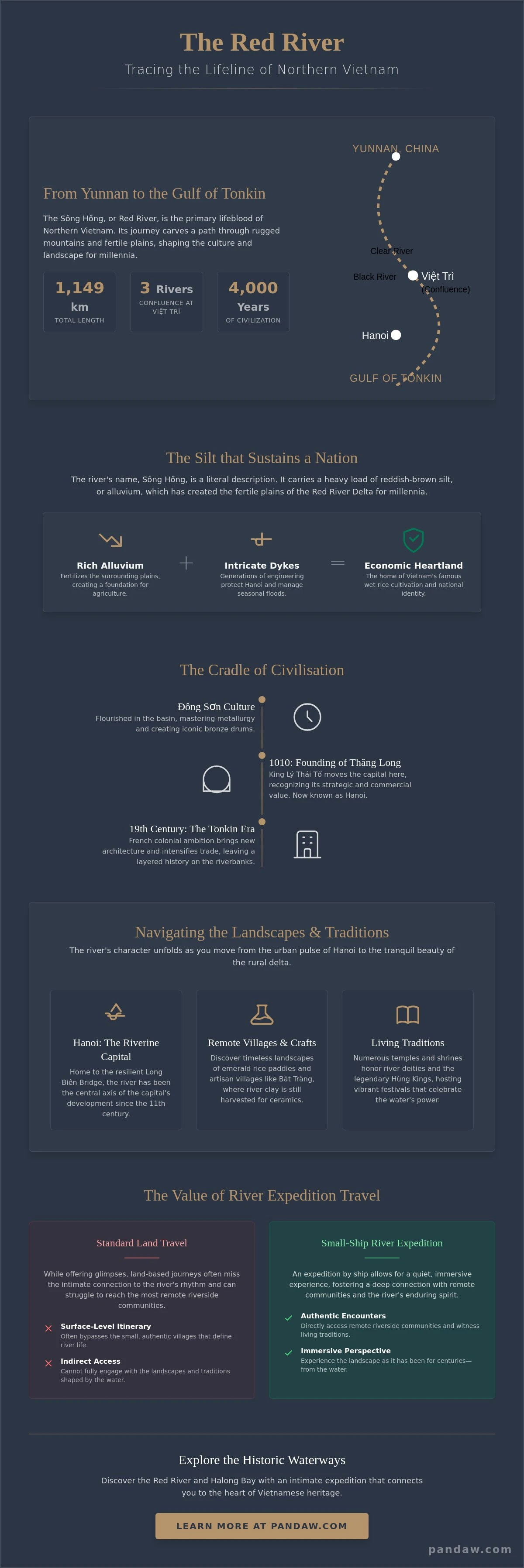
Tracing its origin to the high mountains of China's Yunnan province, the Red River (Sông Hồng) serves as the primary lifeblood of Northern Vietnam. While digital search results often prioritize the North American rivers of Oklahoma or Texas, this ancient Asian waterway is a distinct entity of immense cultural and geological weight. It flows for 1,149 kilometres, carving a path through rugged terrain before spilling into the Gulf of Tonkin.
From Yunnan to the Gulf of Tonkin
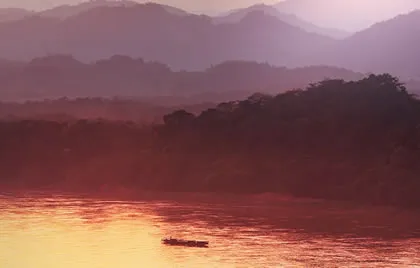
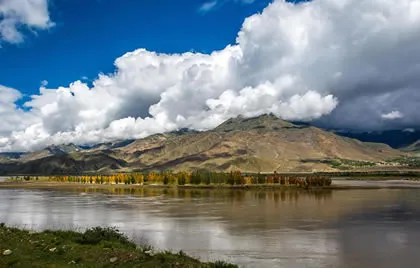
The river’s descent is a study in natural power. It carves through deep, narrow canyons in China, gathering momentum before it crosses into the Vietnamese lowlands. At Việt Trì, a significant geographical milestone occurs. Here, the main artery meets the Black River (Sông Đà) and the Clear River (Sông Lô). This confluence creates a powerful, wide waterway that has dictated the movement of people and goods for centuries. For the modern explorer, it's at this point that the Red River begins to reveal the expansive delta that defines the north.
The Silt that Sustains a Nation
The name Sông Hồng isn't merely poetic; it's a literal description of the river's character. Heavy with reddish-brown silt, the water carries a rich load of alluvium that has fertilized the surrounding plains for millennia. This sediment is the foundation of the region's famous wet-rice cultivation, making the red river delta the economic heartland of the nation. Historically, the river's seasonal flooding cycles were both a blessing and a threat. To protect the burgeoning city of Hanoi, vast and intricate dyke systems were constructed over generations. These embankments remain an essential feature of the landscape, standing as a testament to the enduring relationship between the Vietnamese people and the water that sustains them.
The Cradle of Civilisation: History of the Red River Delta
The delta is the ancestral home of the ethnic Viết people. It's where the cultural identity of a nation was forged through centuries of rice cultivation and river trade. In 1010, King Lý Thái Tổ moved the capital to this fertile plain, founding Thăng Long, which we now call Hanoi. He recognized the river's strategic value as both a natural defensive barrier against northern incursions and a vital gateway for maritime commerce. This decision anchored the Vietnamese state to the pulse of the Red River, ensuring the waterway remained central to the country's political and economic life.
Ancient Roots and the Đông Sơn Bronze Age
Before the rise of medieval dynasties, the Đông Sơn culture flourished within this basin. They're best known for their iconic bronze drums, which are intricate symbols of a highly organized society. These artifacts reveal a civilization that mastered metallurgy and complex social structures long before outside influences arrived. Life in the delta required early engineering feats to manage the unpredictable flow of the Red River. To truly grasp the depth of Red River delta history, one has to appreciate these ancient attempts to harness seasonal floods for wet-rice farming.
Colonial Trade and the Tonkin Era
During the 19th century, French interest in the region intensified as explorers sought a reliable trade route into the heart of China. This period of "Tonkin" history brought a new architectural language to the riverbanks. Stately villas and administrative buildings still stand in Hanoi and provincial river ports, their faded ochre walls telling stories of colonial ambition. These structures provide a stark contrast to the ancient pagodas nearby, illustrating the layers of history that define the region.
Spirituality remains deeply connected to the river's ebb and flow. Numerous temples and shrines are dedicated to river deities and the legendary Hùng Kings. These sites serve as focal points for vibrant local festivals that honor the water's life-giving power. For those seeking an authentic encounter with these living traditions, exploring The Red River & Halong Bay by ship allows for a quiet, immersive experience of these remote riverside communities that land travel cannot match.
Navigating the Red River: Landscapes and Traditions
Hanoi: The Capital
The transition from Hanoi's urban pulse to the tranquil upper reaches reveals the true character of Northern Vietnam. In the capital, the river's heritage is physically embodied by the Long Biên Bridge, a structure that has survived decades of upheaval and stands as a testament to the city's resilience. This travel guide to Hanoi provides context on how these landmarks define the city's soul. Since the 11th century, the river has functioned as the central axis of Hanoi’s urban development, dictating the placement of its royal citadels and merchant quarters.
Beyond the City: Remote Villages and Verdant Banks
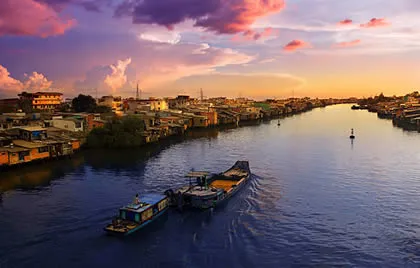
Leaving the city behind, the landscape softens into the timeless beauty of the rural delta where emerald rice paddies stretch toward the horizon and water buffalo dominate the banks. This region remains a sanctuary for traditional crafts that rely on the Red River and its resources. In Bát Tràng, artisans continue to harvest river clay for their ceramics, while other communities use the river to transport hand-woven textiles and traditional goods to distant markets. These waterways also serve as the original stage for water puppetry, an art form born in the flooded paddies that remains a vital link to the spiritual world.
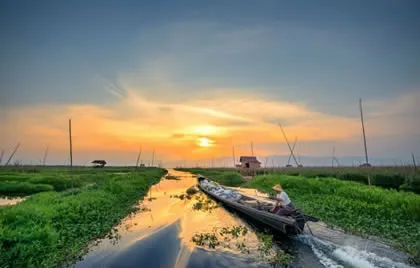
As the Red River flows toward the coast, the topography grows more dramatic. Limestone karsts rise abruptly from the plains, signaling the proximity of the sea. The daily rhythm here is dictated by the water's flow. Small sampans navigate the narrower channels, and floating markets serve as social hubs for families who've lived on the river for generations. To understand this complex waterway beyond the reach of the city, consider exploring Halong Bay & The Red River on a small-ship expedition.
Expeditionary Travel: Experiencing the Red River in 2026
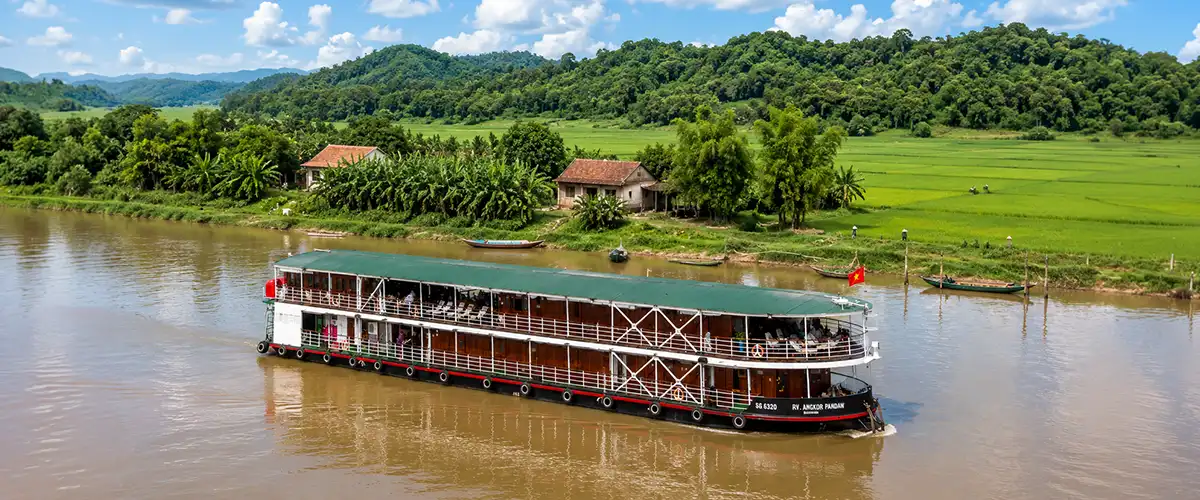
Navigating the Red River presents a unique set of challenges that excludes larger, mass-market vessels. The river’s shifting sandbars and seasonal depth variations demand shallow-draft, handcrafted ships capable of precise maneuvering. While industrial barges dominate the commercial sections, a boutique expedition offers a starkly different perspective. It prioritizes the quiet observation of riverside life over the crowded itineraries often found in coastal tourism. This specialized approach ensures that the journey remains intimate and respectful of the delicate ecosystems along the banks.
The Small-Ship Advantage
Small-ship expeditions provide access to remote communities that larger vessels must bypass. By utilizing low-impact vessels, travelers can moor in secluded locations where the arrival of a ship is still a notable event. The atmosphere on a colonial-style teak vessel evokes the romance of early exploration, mirroring the heritage of the great river fleets of the past. This sense of being an insider is bolstered by locally-hired crews. These experts offer deep regional insights and personal stories, creating a cultural connection that goes far beyond a standard sightseeing tour.
Charting Your Path Through Vietnam's Living History
The Red River remains an enduring witness to the evolution of Northern Vietnam, from the bronze age echoes of the Đông Sơn to the colonial remnants of the Tonkin era. You've seen how its reddish silts have nourished both the soil and the soul of the nation, creating a landscape where ancient traditions like water puppetry still thrive in remote riverside pockets. Understanding the Red River requires more than a glance from a city bridge; it demands a journey that respects the waterway's unique navigational rhythms and its deep cultural complexity.
As pioneers of Red River cruising since 2015, we've refined the art of the river expedition to offer true immersion. Our specialized shallow-draft teak vessels are designed to reach the secluded villages and narrow reaches that larger ships simply cannot access. With expert local guides to lead the way, you'll find a connection to the land that is both intimate and authentic. Explore the Red River and Halong Bay on a handcrafted Pandaw expedition and witness the cradle of Vietnamese civilization from the deck of a traditional river ship. The water is waiting to tell its story.
Frequently Asked Questions
Where is the Red River located?
The Red River originates in the mountains of China's Yunnan province and flows through northern Vietnam before emptying into the Gulf of Tonkin. It serves as the primary geographical and cultural backbone of the north, with the capital city of Hanoi situated on its banks. The river system creates a vast, fertile delta that has sustained Vietnamese civilization for over four millennia.
Is the Red River in Vietnam different from the one in the United States?
The Asian Red River, known locally as the Sông Hồng, is entirely separate from the rivers of the same name found in the United States. While North American rivers like the Red River of the South are part of the Mississippi watershed, the Vietnamese waterway is a primary system in Southeast Asia. It possesses a distinct 4,000-year history rooted in wet-rice cultivation and ancient bronze-age cultures.
What makes the Red River in Vietnam look red?
The distinct color of the red river is caused by the high levels of reddish-brown silt and iron oxide sediment it carries from the mountains of China. This nutrient-rich alluvium is what has made the surrounding delta one of the most productive agricultural regions in Southeast Asia. The sediment is so significant that it continues to push the delta coastline outward into the sea by several meters each year.
Can you cruise the entire length of the Red River?
You cannot cruise the entire 1,149-kilometre length due to rugged mountain terrain in the upper reaches and various hydroelectric dams. However, significant navigable sections are open for exploration within Vietnam. Modern expeditions focus on the vital stretch between the confluence at Việt Trì and the coastal wonders of Halong Bay, utilizing specialized shallow-draft vessels to manage the river's shifting depths and sandbars.
What is the best time of year to visit the Red River Delta?
The ideal months to visit the delta are generally from September to November or from February to April. During these periods, the weather is typically cooler and drier, avoiding the intense heat of the summer and the heavy monsoon rains. Traveling during these windows ensures more stable water levels on the Red River, providing a smoother journey through the remote villages and historical sites of the northern heartland.