River Cruise Photography Tips: Capturing the Soul of Asia's Waterways
We understand that documenting a voyage through Southeast Asia or India involves a delicate balance of technical skill and cultural respect. You want to capture the atmosphere of the shoreline without intruding upon the lives of those who call the river home. This guide promises to help you master the art of storytelling through your lens with expert guidance on light, composition, and ethical photography during your river expedition. We will explore practical techniques for moving subjects and provide a framework for capturing the heritage of the river with the quiet confidence of a seasoned explorer. If you've ever struggled with the vibration of a vessel or the harsh glare of a midday sun, these river cruise photography tips will help you move beyond simple snapshots toward a more profound narrative of your journey.
Mastering the River’s Light: Timing and Atmosphere
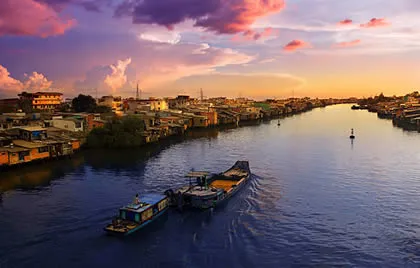
The rhythm of the river is dictated by the sun. For those seeking the best river cruise photography, the hours surrounding dawn and dusk are non-negotiable. On the Mekong, the first light of day casts a warm, amber glow over the water, softening the features of passing sampans and highlighting the intricate carvings of riverside pagodas. This period offers a soft, directional light that creates long shadows, adding a three-dimensional quality to the landscape that's often lost during the heat of the day.
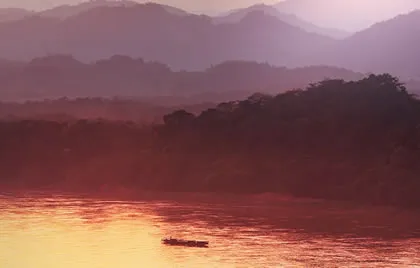
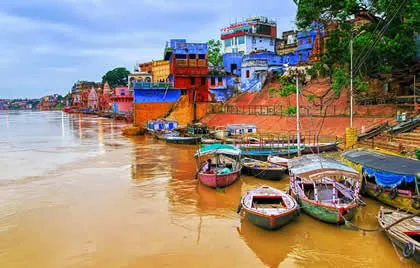
Atmospheric light is the interplay between morning river mist and rising tropical sun. This phenomenon is particularly striking on the Ganges, where the haze creates a natural diffusion that simplifies complex scenes into layers of silhouette and light.
As the sun climbs, the light becomes unforgiving. Rather than setting the camera aside, look toward the shoreline for deep shadows and the weathered textures of ancient brickwork or thatched roofs. These high-contrast conditions are ideal for focusing on the geometric patterns of the riverbank. When evening arrives, the blue hour provides a brief, magical window where the sky turns a deep indigo, perfectly balancing the warm glow of oil lamps and temple lights along the shore. Understanding these cycles is a fundamental part of mastering travel photography in the tropics.
The Monsoon Palette: Photography in Changing Weather
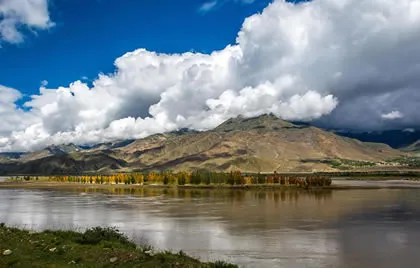
Dramatic storm clouds over the Lower Ganges create more compelling stories than clear blue skies. The arrival of the monsoon brings a shift in the color palette, replacing the dusty browns of the dry season with vibrant, saturated greens. During gentle rains, the river's surface transforms into a mirror, offering unique opportunities to capture the reflections of passing vessels and riverside life. These moments of weather-driven drama often yield the most evocative images of the journey, reflecting the true character of the region.
Framing the Voyage: Compositional Secrets from the Deck
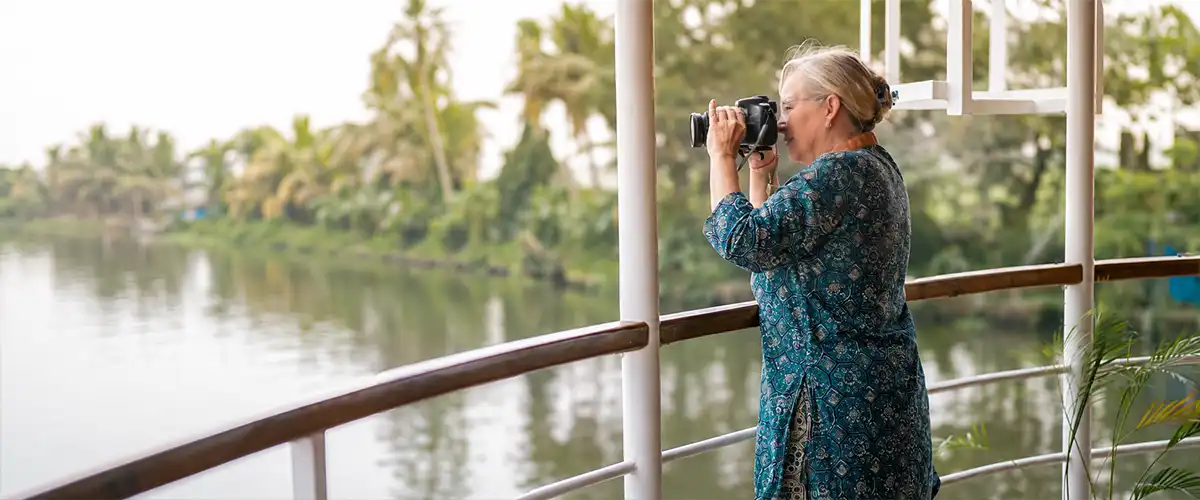
The vessel itself is more than just a platform; it's part of the story. One of the most effective river cruise photography tips is to use the ship's heritage to frame your view of the shoreline. Position your lens behind the polished brass railings or use the rich, handcrafted teak decks to create a natural border for the landscape. This technique anchors the viewer, providing a sense of place and perspective that a simple horizon shot lacks. By including these architectural elements, you evoke the romance of an earlier era of travel while grounding your image in the reality of the expedition.
You can often use shorter focal lengths to capture the intimacy of village life as you glide past, rather than relying on heavy telephoto lenses. Travel photography tips often emphasize the importance of leading lines, and the river provides these in abundance. Use the gentle wake of the boat or the sweeping curve of the waterway to guide the viewer’s eye toward a distant mountain range or a riverside market.
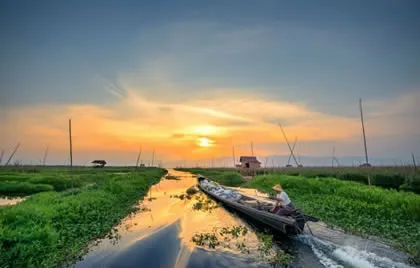
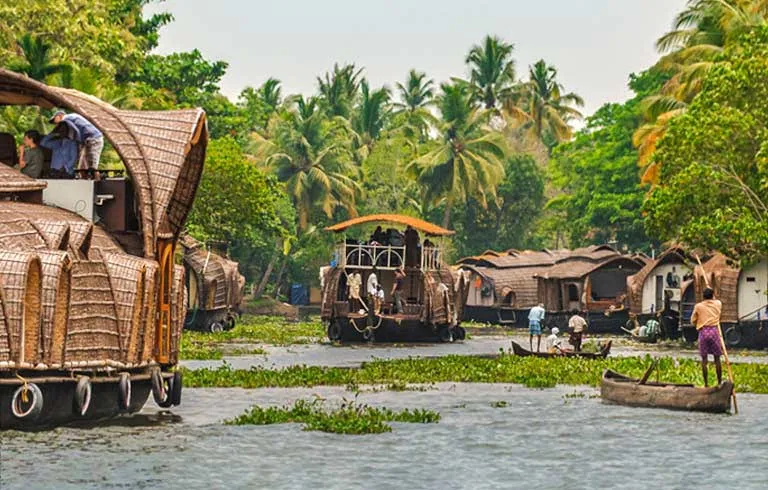
Proportion is essential to conveying the river's magnitude. Including a local sampan or a section of the ship's bow helps the viewer grasp the scale of the vast Asian waterways. This contrast between the vessel and the environment highlights the adventurous spirit of the journey. If you're looking to plan your next photographic journey, you can explore our various river expeditions to find the perfect backdrop.
The Human Element: Respectful Portraits in Remote Communities
Capturing the soul of a destination requires looking beyond the scenery to the people who shape it. Effective river cruise photography always prioritizes the human connection over the immediate technical shot. Photography should be a bridge for interaction rather than a barrier. Before raising your camera, take a moment to establish a rapport. A simple nod or a shared smile often creates the intimacy necessary for a portrait that feels authentic rather than intrusive.
Along the Red River, the rhythm of village life offers a rich tapestry of candid moments. You'll find artisans at their looms, families tending riverside gardens, and children playing by the water's edge. Documenting these scenes requires a patient eye. Rather than staging a photo, wait for the natural flow of activity to resume. This approach preserves the quiet dignity of the subject and reflects the living heritage of the region.
The ethics of the lens are particularly vital in spiritual settings. Always seek permission before photographing monks in monasteries or devotees at prayer in riverside temples. Respecting local customs is a hallmark of the cultured traveler. In these remote communities, your presence as a guest is a privilege. Behaving with courtesy ensures that the tradition of hospitality remains open for those who follow. To begin your own journey of cultural discovery, you can browse our full range of river expeditions.
The Art of the Shoreline Portrait
Contextualize your subjects by using the environment as a natural frame. Weathered village doorways, the intricate patterns of a thatched wall, or the sweep of overhanging palms provide a sense of place that a tight headshot lacks. When documenting specific traditions, such as those found at the Nagaland Hornbill Festival, focus on the fine details. The texture of tribal regalia or the focused expression of a performer tells a far deeper story than a standard wide-angle shot of the crowd. These details are the threads that weave the narrative of the river together.
Technical Preparation for the Tropical Waterway
While the steady pulse of the engine is part of the ship's character, it introduces a subtle vibration that can soften your images. To ensure crisp results from a moving deck, prioritize higher shutter speeds; a minimum of 1/500th of a second is often necessary when capturing the shoreline from the water. This technical adjustment compensates for both the vessel's progress and the natural movement of the river, ensuring that the intricate details of riverside life remain sharp.
A versatile zoom lens is the most valuable tool for navigating the diverse landscapes of the Upper Mekong, allowing you to transition seamlessly from wide river vistas to intimate village details without the need for frequent lens changes.
Tropical environments present unique challenges for equipment care. The transition from an air-conditioned cabin to the humid teak decks can cause immediate condensation on your glass. It's wise to let your camera acclimate in a shaded area of the deck for twenty minutes before you begin shooting. Keep silica gel packets in your bag to manage moisture, and use a simple dry bag for shore excursions where sudden tropical downpours are a regular part of the green season. These small precautions protect the craftsmanship of your gear and ensure you're ready when the light is perfect.
Adopting a "less is more" philosophy allows for greater freedom during discovery. A bulky camera bag is often a hindrance when navigating narrow village paths or stepping into a local sampan. By carrying only what's essential, you remain present and ready to engage with the environment rather than being preoccupied with gear. Since connectivity on the river can be unreliable, it's also wise to maintain a local backup workflow that doesn't depend on cloud storage during your expedition.
Camera Settings for the Water
Fine-tuning your settings can significantly enhance the atmosphere of your photos. Adjusting your white balance to a warmer preset helps capture the true radiance of golden temples and deep tropical sunsets, avoiding the clinical feel of auto settings. Additionally, a circular polarizer is indispensable for managing the intense reflections on the water's surface. This simple filter also enriches the lush greens of the delta, revealing the vibrant saturation of the landscape that defines these historic waterways.
Embarking on Your Visual Narrative
By mastering the nuances of tropical light and prioritizing connections with local communities, you move beyond simple documentation toward true storytelling. These river cruise photography tips serve as a foundation for your journey, but the best images often occur when you step away from the viewfinder to simply experience the river's rhythm. You aren't just a spectator; you're a witness to a living history that continues to unfold along the banks.
Our handcrafted teak and brass vessels provide the perfect vantage point for this exploration. Their specialized shallow-draft capabilities allow access to remote villages where authentic life remains undisturbed by the footprints of mass tourism. Accompanied by expert local guides who offer deep regional insights, you'll find that every bend in the river reveals a new story waiting to be told through your lens. The soul of the waterway is waiting. All you need is the vision to see it. Explore our handcrafted river expeditions and find your next subject.
Frequently Asked Questions
What is the best lens for a river cruise in Asia?
A versatile zoom lens, such as a 24-105mm or 24-70mm, is the most effective choice for an Asian river expedition. This range allows you to capture the sweeping vistas of the Lower Ganges while quickly zooming in to document the intricate details of a passing sampan. It minimizes the need for lens changes, which is vital in humid environments where protecting your sensor from moisture and dust is a priority.
How do I prevent my camera from fogging up in tropical humidity?
You should allow your camera to acclimate to the outside temperature for at least twenty minutes before you begin shooting. Moving your gear directly from a cool, air-conditioned cabin to the humid teak decks causes condensation on the lens glass. Keeping your equipment in a shaded area of the deck or using a sealed camera bag during the transition helps manage these temperature shifts effectively.
Is it okay to take photos of monks and religious ceremonies?
Photographing monks and religious ceremonies is generally acceptable provided you seek permission and act with respect. It's essential to dress modestly, covering shoulders and knees, and to maintain a quiet, unobtrusive presence during rituals. Avoid using a flash in temples and always prioritize the sanctity of the moment over the shot.
How can I take sharp photos while the boat is in motion?
You can take sharp photos by using a high shutter speed of at least 1/500th of a second to counteract the vessel's movement. While our shallow-draft ships provide a steady platform, the natural vibration of the engine and the flow of the water can cause blur at slower speeds. Utilizing your camera’s internal image stabilization and maintaining a stable stance on the deck will further ensure your images remain crisp.
Do I need a tripod for river cruise photography?
A tripod is generally unnecessary and often impractical on a boutique small ship. The motion of the boat renders a tripod ineffective for long exposures, as the vessel itself is constantly shifting on the water. Instead, rely on hand-held techniques, slightly higher ISO settings, and the natural support of the ship’s brass railings to stabilize your camera during the low-light transitions of dawn or dusk.