Southeast Asia River Cruise: A Guide to the Region’s Historic Waterways
If you want to understand Southeast Asia beyond its busy cities and popular tourist routes, you’ll need to look to the rivers. This guide is for travelers who want deeper meaning in the places they visit. We’ll help you understand the differences between each river system, choose the best time to travel, and find a ship designed for real discovery. From the old trade routes of the Red River to the spiritual traditions along the Ganges, this is your starting point for exploring the heart of the East at a slower, more thoughtful pace.
Navigating the Diverse Waterways of a Southeast Asia Cruise
Rivers have always been the silent narrators of Southeast Asian history. They aren't merely bodies of water but living arteries that have sustained ancient civilizations and shaped modern village life through centuries of trade. To embark on a Southeast Asia river cruise is to step onto a path carved by history itself. The geography of these waterways dictates the "rhythm of the road," where the seasonal rise and fall of the water determines when crops are planted and when festivals are held. It's a journey through time.
The Mekong: A Tale of Two Journeys
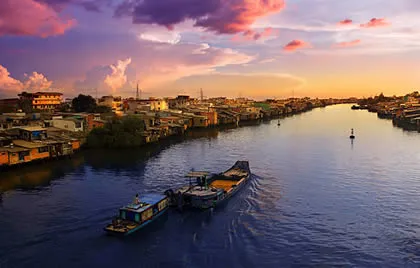
The Mekong River acts as a transboundary thread connecting the remote jungles of Laos with the fertile plains of Vietnam. Travelers often choose the Classic Mekong route to witness the vibrant transition from the French colonial charm of Phnom Penh to the vast, pulsing energy of the delta. Beyond the bustling markets, the journey often includes the "Great Lake" of Tonle Sap, a unique ecosystem where the water’s direction changes with the seasons. For those seeking solitude, the Upper Mekong offers a rugged alternative, moving through steep gorges and hidden villages that remain largely untouched by the modern world.
Northern Vietnam and the Red River
Exploring the Halong Bay & Red River route reveals a striking contrast between the industrial hum of Hanoi and the quiet, emerald beauty of the limestone karsts. The Red River serves as the ancestral home of the Kinh people and the birthplace of their unique water puppetry traditions. While many visitors see only the surface of Halong Bay, a river expedition moves deeper into the cultural cradle of Northern Vietnam. This route follows ancient trade paths into the mountainous interior, offering a perspective on the region that land-based tours often miss. You'll find a world where traditions are as deep as the river itself.
Choosing Your Route: The Classic Mekong vs. The Red River Delta
Deciding on a Southeast Asia river cruise often comes down to the specific heritage you wish to explore. If your interest lies in the grand scale of Khmer history and the transition from ancient empires to French colonial influence, the Mekong is your path. Conversely, those drawn to the intricate craftsmanship of the Kinh people and the rugged highland traditions of the north will find the Red River more compelling. This choice is less about the vessel and more about the cultural story you wish to inhabit. For a broader look at the continent's waterways, you may find our guide to Asia River Cruises: A Guide to the Continent’s Historic Waterways helpful.
Seasonal Planning and Water Levels
The rivers of Southeast Asia live by a seasonal pulse that dictates movement. During the high-water season, usually from August to November, the Tonle Sap lake expands, allowing ships to reach the heart of Cambodia. For photographers, the cooler months of December and January provide the best opportunities for capturing morning mist over the water and the golden light that bathes the highland villages. Planning your Southeast Asia river cruise around these cycles ensures you see the landscape at its most atmospheric.
Remote Access: The Upper Mekong and Laos
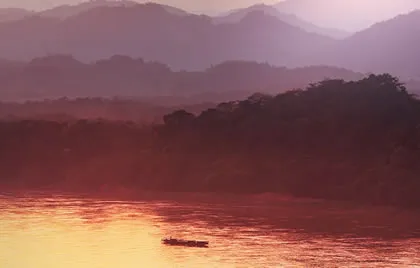
A journey on the Laos Mekong offers a stark contrast to the vibrant commerce found in the Vietnamese delta. While the south is defined by floating markets and a fast-paced river trade, the upper reaches are a sanctuary of quiet, spiritual traditions and dense jungle landscapes. Small ships are essential here. They navigate narrow channels where larger vessels simply cannot go. This intimacy allows travelers to connect with local communities on a human scale, far from the well-trodden paths of mass tourism. If you're ready to explore these historic arteries, you can view our current river expeditions.
The Small-Ship Advantage: Accessing Remote Communities and Hidden Traditions
True discovery on a Southeast Asia river cruise depends on a vessel's ability to go where others cannot. While large ships are often restricted to deep-water ports and industrial docks, a shallow-draft vessel can navigate the shifting sandbars and narrow tributaries of the Mekong and Red River. This technical capability is the foundation of an expedition. It allows for a style of travel that respects the river’s natural flow and brings you directly to the heart of village life, far from the reach of land-based tours.
The atmosphere on board is one of quiet, understated elegance. With under 30 staterooms onboard, the experience remains intimate. This small scale ensures that when we step ashore, we don't overwhelm the local community. Instead, we arrive as curious guests. Our locally hired crews and expert guides offer an insider perspective, sharing stories of river trade and cultural traditions that aren't found in guidebooks.
By bypassing the well-worn paths of mass tourism, we find the quiet corners of the region that remain unchanged by time. A Southeast Asia river cruise offers access to secluded forest monasteries, artisan silk weavers, and pottery villages where ancient techniques are still practiced daily. These encounters are not staged; they're glimpses into a living history. For those interested in the specific history of the southern reaches, our guide to The Classic Mekong: A Guide to River Cruising Vietnam & Cambodia provides deeper insight into the routes through the delta.
Step Into the Living History of the East
The rivers of the East are far more than mere routes; they're repositories of culture and heritage that define the rhythm of daily life. Choosing a Southeast Asia river cruise means embracing the seasonal pulse of these historic waterways and seeking the intimacy that only a small vessel can provide. Whether you're drawn to the spiritual tranquility of the Upper Mekong or the vibrant traditions found along the Red River Delta, the right expedition brings you closer to the heart of the community. We invite you to explore our handcrafted Southeast Asia river expeditions and discover a world where history still flows with the tide. Your journey into the soul of the region is waiting.
Frequently Asked Questions
What is the best time of year for a Southeast Asia river cruise?
The ideal window for a Southeast Asia river cruise is generally between November and February, when the weather is cooler and the skies are clear. These months provide the most comfortable temperatures for walking through ancient temples and remote villages. If you wish to witness the seasonal expansion of the Tonle Sap in Cambodia, the high-water period from August to November offers the best navigational access into the heart of the region.
Do I need a visa for a Mekong River cruise through Vietnam and Cambodia?
Travelers must obtain a Vietnam visa in advance, either as an e-visa or a paper visa from an embassy. For entry into Cambodia, a visa on arrival can be obtained at the river border for approximately $35 to $50 USD in cash. Cambodian e-visas aren't accepted at these specific waterway crossings, so carrying the correct currency is essential for your transit.
How do small-ship expeditions differ from large ocean cruises in Asia?
Small-ship expeditions prioritize access and intimacy, utilizing shallow-draft vessels to reach remote communities that large ocean liners cannot visit. While massive ships are restricted to deep-water industrial ports, a Southeast Asia river cruise on a smaller vessel allows you to dock directly at village banks. This creates a quiet, personal atmosphere where you can connect with local cultures without the crowded feel of a typical tourist herd.
What should I pack for a river journey through the tropical climates of Southeast Asia?
Pack lightweight, breathable clothing made from natural fibers like linen or cotton to stay comfortable in the tropical heat. You'll need modest attire that covers both shoulders and knees for visits to secluded forest monasteries and spiritual sites. A light jacket is useful for the cooler morning mist in the highlands, and sturdy walking shoes are necessary for exploring the unpaved paths of rural villages and historic trade routes.