Red River and Halong Bay Cruise: A Voyage Through Vietnam’s Cultural Cradle
If you want to experience the real heart of Northern Vietnam, you won’t find it in Hanoi’s bright lights or on crowded day boats. You’ll find it along the slow, earthy waters that flow toward the Tonkin Gulf: rivers that carry stories, livelihoods, and traditions you rarely see from the usual tourist routes. Many travelers come for the beauty of the limestone karsts, only to discover they’re sharing the moment with hundreds of others. A Red River and Halong Bay cruise offers a different way to explore, blending Vietnam’s maritime heritage with access to remote river villages unreachable by road. This article is for travelers who want more than just a quick look at a destination; they want to understand it. Keep reading for a preview of the history, landscapes, and gentle pace that make this route so rewarding.
Navigating the Cradle of Tonkin: Why the Red River and Halong Bay Belong Together
The Red River, or Song Hong, serves as more than a geographical feature; it's the ancestral lifeblood that carved the very identity of Northern Vietnam. While many travelers view the coast as a separate entity, a Halong Bay & The Red River expedition reveals that these two landscapes are inextricably linked by history and hydrology. The fertile plains of the Red River Delta have sustained civilizations for millennia, providing the agricultural wealth that built the imperial capitals. To understand this region, one must move past the hurried day-trip mentality. A slow-paced Red River and Halong Bay cruise allows for a deeper observation of the embankments, where the industrious energy of river life unfolds in the golden light of the morning.
The Historical Significance of the Song Hong
The river’s heavy sediment, which gives it its characteristic ochre hue, has enriched the soil for generations of rice farmers. This abundance fostered a sophisticated culture centered around the water. From the early Dong Son civilization to the French colonial era, the Song Hong was the primary conduit for goods and ideas. These ancient trade routes once pulsed through these arteries, connecting the inland markets of Hanoi to the maritime silk roads of the Gulf of Tonkin. Traveling by small ship allows us to follow these historic paths, visiting remote river villages where traditional craftsmanship remains a cornerstone of daily existence.
A Transition from Silt to Stone
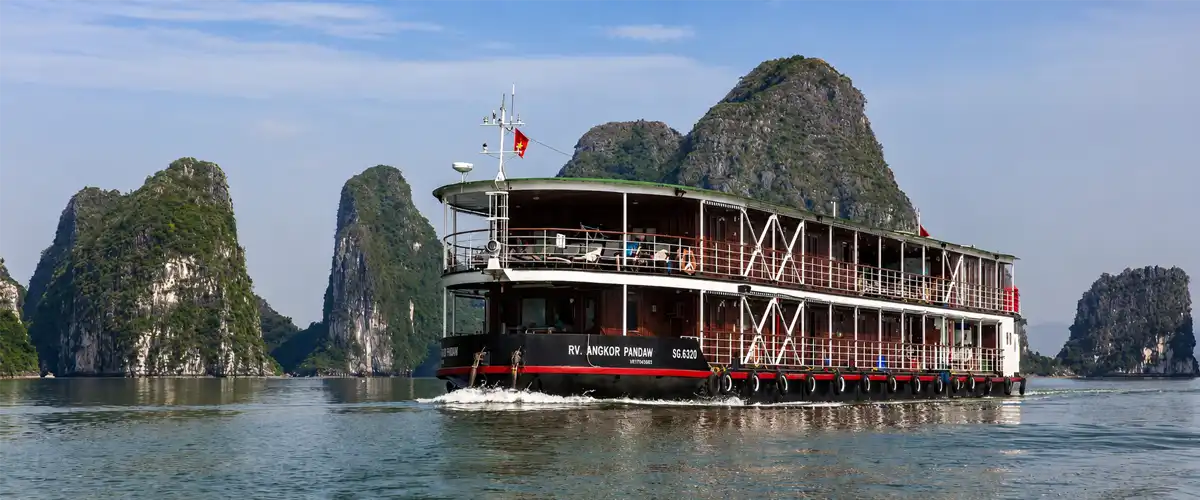
The most evocative moment of the journey occurs at the river’s mouth. Here, the silt-heavy currents of the delta gradually surrender to the clear, emerald depths of the sea, creating a striking contrast. The landscape shifts from flat, verdant banks to the sudden, towering presence of limestone karsts. This transition marks the move from the human-centric world of the delta to the ethereal, mythic silence of the islands. By approaching the bay from the river, travelers experience the landscape as the ancient mariners did, watching the horizon transform from the familiar comforts of the shore to the labyrinthine wonders of the stone forest.
From Inland Artisans to Mythic Karsts: The Rhythm of the Expedition
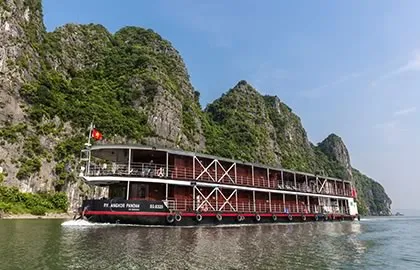
The cadence of a Red River and Halong Bay cruise is set by the rising sun. Each day begins with a soft transition from the ship's teak decks to the muddy banks where history is still written by hand. Unlike larger vessels that remain anchored in deep water, our small ships possess the navigational capabilities to nose into smaller tributaries. This specialized access ensures that every Red River and Halong Bay cruise remains focused on the intimacy of the landscape rather than the spectacle of the crowds. It's a journey that prioritizes the slow reveal of the delta's secrets over the hurried pace of modern travel.
Authentic Encounters in the Red River Delta
Our path leads to secluded communities where the connection to the land hasn't wavered for centuries. We visit several key cultural sites to understand the region's depth:
-
Duong Lam: An ancient village where laterite brick houses have stood for four hundred years, offering a window into the architectural heritage of the Tonkin region.
-
Bat Trang: A community of potters whose ceramic legacy dates back to the 14th century, where we observe the steady hands that shape the local trade.
-
Thuy Anh: The birthplace of water puppetry, where the traditions of the flooded rice paddies come to life in the golden light of the afternoon.
For those seeking to delve deeper into these stories, our guide on The Red River: A Journey Through Vietnam’s Cultural Cradle offers further historical context. The atmosphere here is one of quiet industry, often draped in a delicate morning mist that blurs the line between the water and the emerald fields.
Charting Your Course Through Vietnam's Living History
Northern Vietnam isn't just a collection of isolated sights; it's a continuous narrative of water and stone. By choosing a Red River and Halong Bay cruise, you embrace the transition from the delta’s industrious river life to the mythic silence of the limestone karsts.
As a pioneering river cruise operator since 1995, we remain dedicated to the art of slow, thoughtful travel. Our handcrafted colonial-style brass and teak vessels provide a refined atmosphere for shared discovery, while expert local guides offer the deep regional knowledge necessary to understand the Tonkin region's complex heritage. This is a journey for the curious, focusing on the human connection between the traveler and the local community rather than the spectacle of mass tourism.
Frequently Asked Questions
What is the best time of year for a Red River and Halong Bay cruise?
The ideal period for a Red River and Halong Bay cruise is during the cooler, drier months from October to April. This window offers stable weather for navigating the delta and provides the soft, golden light preferred for photography. Traveling during these months avoids the intense heat and heavy rainfall of the summer monsoon, ensuring that shore excursions to ancient villages and temple sites are comfortable and visually striking.
How do small ships navigate the shallow parts of the Red River?
Small ships navigate the Red River using specialized shallow-draft technology designed specifically for regional river systems. This technical capability allows our vessels to glide over silt deposits and navigate narrow channels that are inaccessible to deeper-hulled ships. By maintaining a low profile in the water, we can reach remote inland communities and follow the historical trade routes that defined the Tonkin region's development over the centuries.
What kind of cultural experiences are included in a Northern Vietnam expedition?
Cultural experiences focus on the living heritage of the delta, including visits to ancient villages like Duong Lam and the pottery workshops of Bat Trang. Travelers engage directly with local artisans to understand centuries-old traditions such as water puppetry and lacquerware production. These encounters emphasize the connection between the river and the community, moving beyond surface-level tourism to reveal the spiritual and industrious soul of Northern Vietnam.
How does a river cruise differ from a standard Halong Bay boat trip?
A Red River and Halong Bay cruise differs from a standard boat trip by offering a transition from the industrious delta to the mythic karsts. While standard trips often last only one or two nights and remain within the bay's central hubs, a river expedition spends several days exploring the inland waterways. This approach provides a deeper understanding of the region's history and allows for secluded access to the quieter corners of Lan Ha Bay.